Discovering your string trimmer spewing smoke can be alarming, transforming a simple yard chore into a moment of panic. While a puff of smoke might seem like a dire sign, many instances of a smoking string trimmer point to common, easily fixable issues that you can tackle right in your garage. Understanding the root cause of the smoke is the first step to a successful repair, saving you time, money, and the frustration of a stalled project. This guide will walk you through the primary reasons your string trimmer might be smoking and, more importantly, equip you with five straightforward solutions to get it running smoothly and smoke-free again.
Understanding Your Smoking String Trimmer: Why It Happens
A string trimmer, especially a two-stroke model, is a marvel of small engine engineering, but like any machine, it has its quirks. Smoke is usually a symptom of incomplete combustion or something burning where it shouldn’t be. This could range from a simple fuel mix error to components getting too hot. Identifying the exact cause starts with observing the smoke itself.
Decoding Smoke Colors
The color of the smoke billowing from your string trimmer offers crucial clues about the underlying problem. Pay close attention before you attempt any fixes. For expert gas reviews on this site.
- Blue or Bluish-White Smoke: This is typically the most common smoke color and almost always indicates that your engine is burning oil. For two-stroke engines, this often means an incorrect fuel-to-oil mixture, with too much oil being the culprit. In four-stroke trimmers (less common but they exist), it could signal overfilled oil or worn internal engine components allowing oil into the combustion chamber.
- Black Smoke: If you see thick, dark black smoke, it’s usually a sign of a “rich” fuel mixture. This means the engine is receiving too much fuel relative to the amount of air, leading to incomplete combustion. Common causes include a clogged air filter, a dirty carburetor, or even the choke being left on during operation. Old or stale gasoline can also contribute to this issue.
- Grey Smoke: Grey smoke can sometimes be a combination of blue and black, indicating both oil burning and fuel issues. It might also suggest severe engine wear or, in some cases, a leak allowing fluids to burn on hot engine parts. A light grey puff at startup can sometimes be normal, but persistent grey smoke warrants investigation.
|
Our Picks for the Best String Trimmer in 2026
As an Amazon Associate I earn from qualifying purchases.
|
||
| Num | Product | Action |
|---|---|---|
| 1 | 20V 12" Cordless String Trimmer With 2 X 4.0Ah Battery and Charger, Electric Grass Trimmer Battery Powered Eater String, Edger Lawn Tool Grass Cutter With 8pcs Line, Lawn Mover For Garden Yard, Orange |

|
| 2 | BLACK+DECKER String Trimmer, Electric, 14-inch (BESTE620) |
|
| 3 | WORX Cordless String Trimmer & Lawn Edger, 12'' Electric Weed Wacker with 5.5 LBS, 20V Weed Eater with 90° Pivoting Head, Battery & Charger Included, WG170.2 |
|
| 4 | BLACK+DECKER Weed Wacker with Auto Feed, 14-Inch 2 in 1 String Trimmer Lawn Edger, Powerful 6.5-Amp Lightweight Electric Weed Eater (BESTA510) |
|
| 5 | Cordless String Trimmer Compatible with Milwaukee M18 18V Battery(Tool Only), 12-Inch 3-in-1 Weed Eater with 8500RPM Upgraded Motor, Automatic Line Feed Weed Wacker for Lawn Edging and Mowing-Red |
|
| 6 | WORX Cordless String Trimmer & Lawn Edger, 12'' Electric Weed Wacker with 4.6 LBS, 20V Weed Eater with 90° Pivoting Head, Batteries & Charger Not Included, WG170.9 |
|
| 7 | CRAFTSMAN WEEDWACKER® String Trimmer, 6.5 Amp, 14-Inch (CMEST913) |
|
| 8 | Cordless String Trimmer Compatible with Dewalt 20V MAX Battery, 12-Inch Weed Wacker Cordless Auto Line Feed,Electric Weed Eater Battery Powered Grass Trimmer w/6 Line Spools(Tool Only) |
|
| 9 | BLACK+DECKER 20V MAX Weed Eater, Edger and Sweeper Combo, Includes 2 Batteries and Charger, Cordless Electric Weed Wacker and 130 Mph Hard Surface Leaf Blower, 10 in. (LCC222) |
|
| 10 | Houselife 12" Cordless Weed Eater Compatible with Dewalt 20V Max Battery (No Battery), Auto Feed Cordless String Trimmer&Weed Wacker, Lightweight Electric 20V Weed Trimmer&Edger for Lawn, Garden, Yard |
|
5 Quick Fixes for a Smoking String Trimmer
Once you’ve observed the smoke color and have an idea of the potential cause, you can proceed with these five quick fixes. Always ensure your string trimmer is turned off and cooled down before performing any maintenance.
1. Adjust Your Fuel Mixture
For two-stroke string trimmers, the fuel mixture is paramount. Too much oil in your gas-oil mix is a primary cause of blue or bluish-white smoke.
Start by completely draining any old fuel from the tank. Ensure you dispose of it responsibly at an appropriate facility, not down a drain. Then, prepare a fresh batch of fuel using the exact gas-to-oil ratio specified in your string trimmer’s owner’s manual. Ratios like 50:1 or 40:1 are common, but never guess. Use high-quality, fresh gasoline (preferably 89 octane or higher, ethanol-free if possible) and a synthetic two-stroke oil designed for air-cooled engines. Mixing in a dedicated fuel can helps achieve accuracy. Using pre-mixed, canned fuel specifically for two-stroke engines can also eliminate guesswork and ensure the perfect ratio.
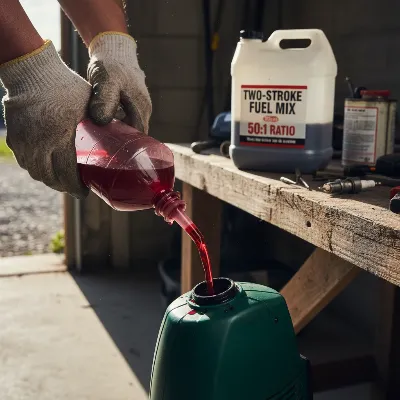 Freshly mixed fuel for a two-stroke string trimmer being poured into the tank, with emphasis on correct ratios.
2. Inspect and Clean the Air Filter
A dirty or clogged air filter restricts the airflow to the engine, causing a “rich” fuel condition that often results in black smoke. The engine struggles to get enough air, leading to incomplete combustion.
Locate your string trimmer’s air filter housing, usually found near the carburetor. Open the housing and carefully remove the air filter. If it’s merely dusty, you can often clean it. For foam filters, wash them gently with warm, soapy water, rinse thoroughly, let them air dry completely, and then apply a few drops of clean engine oil before reinstallation. Paper filters can be tapped lightly to dislodge debris, but if they appear heavily soiled, torn, or saturated with oil, replace them immediately. A clean air filter ensures your engine gets the oxygen it needs for efficient fuel burning.
3. Clear Debris from Cooling Fins and Trimmer Head
Overheating can cause various types of smoke, often white or grey, as components get too hot or debris burns. Restricted airflow around the engine or excessive friction at the trimmer head are common culprits.
Inspect the engine’s cooling fins, which are external metal ridges designed to dissipate heat. Over time, grass clippings, dirt, and other debris can accumulate here, acting as an insulating layer and preventing the engine from cooling properly. Use a brush, compressed air, or even a screwdriver to carefully clear any blockages from these fins. Additionally, examine the trimmer head itself. Debris caught within the head or excessive wear on internal components can create friction and heat, causing plastic to melt or lubricated parts to smoke. Clean out any tangles of grass or weeds, and if the head feels excessively hot or shows signs of melting plastic, it might need replacement.
4. Check and Replace the Spark Plug
A fouled or faulty spark plug can lead to inefficient combustion, contributing to black or blue smoke due as fuel isn’t burned completely. If the spark plug isn’t firing correctly, unburnt fuel and oil can exit the exhaust.
Access your string trimmer’s spark plug using a spark plug wrench. Carefully remove the plug and inspect its tip. A healthy spark plug should have a light tan or greyish-brown color. If it’s black and sooty (indicating a rich mixture or oil burning), oily, or has white deposits (indicating it’s running too hot), it likely needs attention. Clean any carbon buildup with a wire brush or fine-grit sandpaper. If the porcelain insulator is cracked, the electrode is severely worn, or the plug looks heavily fouled, it’s best to replace it with a new one of the correct type and gap specified by your manufacturer. This small component plays a big role in efficient engine operation.
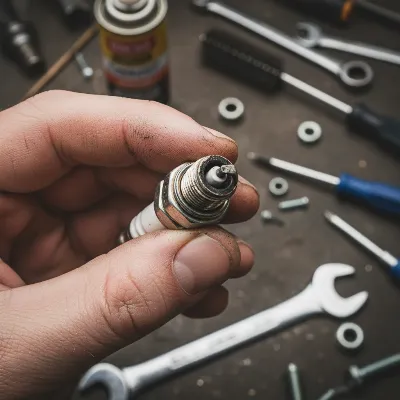 A close-up of a hand inspecting a string trimmer spark plug for signs of fouling or wear.
5. Verify Line Length and Type
While less direct, an overloaded engine can overheat and cause smoke, often appearing white or grey. This can happen if your string trimmer is forced to work too hard due to incorrect line setup.
Ensure you are using the correct diameter and type of cutting line recommended for your specific string trimmer model. Using line that is too thick can put excessive strain on the engine. Also, avoid extending the cutting line too far beyond the guard. While a longer line covers more area, it also increases the load on the engine, forcing it to work harder and potentially overheat. Cut the line to the recommended length (usually no more than 6-8 inches from the spool housing) to reduce engine strain. If you’re constantly tackling very dense brush, consider if your string trimmer is the right tool for the job, or if a more powerful brushcutter might be needed to prevent engine overload.
When to Seek Professional Help
While these five quick fixes resolve many common smoking issues, there are times when a professional mechanic is your best course of action. If you’ve tried all the suggested steps and your string trimmer continues to smoke, or if you notice other concerning symptoms like knocking sounds, significant oil or fuel leaks, a complete loss of power, or if the smoke is accompanied by a strong burnt smell that persists, it’s wise to stop using the machine. These could be signs of more serious internal engine damage, such as worn piston rings, a blown head gasket, or a failing carburetor, which are beyond basic home repairs and require specialized tools and expertise.
Proactive Steps: Keeping Your String Trimmer Smoke-Free
Prevention is always better than cure. Adopting a routine maintenance schedule can significantly extend the life of your string trimmer and prevent frustrating smoking incidents. Always use fresh, properly mixed fuel, and avoid leaving fuel in the tank for extended periods, especially over winter. Regularly clean the air filter and keep the engine’s cooling fins clear of debris. Before each use, quickly check the cutting line and ensure the trimmer head is free of tangles. Storing your trimmer in a clean, dry place will also protect its components.
Conclusion
A smoking string trimmer can be a concerning sight, but often, the solution is simpler than you might think. By understanding what different smoke colors indicate and systematically applying these five quick fixes—adjusting your fuel mixture, cleaning the air filter, clearing debris, checking the spark plug, and verifying your cutting line—you can resolve many common issues at home. Regular maintenance is key to a healthy, smoke-free string trimmer, ensuring it’s ready to tackle your yard work efficiently. Don’t let a little smoke sideline your efforts; with these tips, you’ll be back to trimming in no time.
What’s the most unusual thing you’ve found causing your string trimmer to smoke?
Frequently Asked Questions
Is it normal for a string trimmer to smoke a little on startup?
A small, brief puff of white or bluish-white smoke right after starting a cold engine can sometimes be normal, especially if there’s minor residual oil in the exhaust or if it’s been stored for a while. However, if the smoke is persistent, thick, or continues for more than a few seconds, it indicates an underlying problem that needs attention.
What does blue smoke from a string trimmer mean?
Blue smoke from a string trimmer almost always signifies that the engine is burning oil. For two-stroke engines, this typically points to an incorrect fuel-to-oil mixture, where there’s too much oil. For four-stroke trimmers, it could be a sign of overfilled oil or worn internal engine components.
How often should I change my string trimmer’s air filter?
It’s recommended to inspect your string trimmer’s air filter every 25 hours of use or before each season. Clean it if it appears dirty. If the filter is heavily soiled, damaged, or cannot be thoroughly cleaned, it should be replaced, ideally at least once per mowing season or more frequently in dusty conditions.
Can old gas make my string trimmer smoke?
Yes, old or stale gasoline can definitely cause your string trimmer to smoke, often resulting in black smoke. Over time, gasoline can degrade and separate, leading to inefficient combustion and a rich fuel mixture. Always use fresh fuel, and consider adding a fuel stabilizer if storing gas for extended periods.
What is the correct fuel mix ratio for a 2-stroke string trimmer?
The correct fuel mix ratio for a 2-stroke string trimmer is crucial and varies by manufacturer. Common ratios are 50:1 (50 parts gasoline to 1 part two-stroke oil) or 40:1. Always consult your string trimmer’s owner’s manual to confirm the exact ratio to prevent engine damage and smoking issues.
Get our weekly buyer guide
Practical specs, not advice. Unsubscribe anytime.
