The optimal fuel mix for a 2-stroke string trimmer typically requires a 50:1 fuel-to-oil ratio, meaning 50 parts gasoline to 1 part 2-stroke oil. This ratio is crucial for proper lubrication and efficient engine operation, preventing damage such as engine seizure from too little oil or carbon buildup from too much oil. Always consult your string trimmer’s owner’s manual for the precise ratio, as some models may require 40:1, 32:1, or 20:1.
Understanding Your 2-Stroke String Trimmer’s Fuel Needs
Unlike 4-stroke engines found in cars or some lawnmowers, 2-stroke engines in string trimmers do not have a separate oil reservoir for lubrication. Instead, the engine relies on oil mixed directly into the gasoline to lubricate its internal components during operation. This unique design simplifies the engine, making trimmers lighter and more powerful for their size, but it places a significant responsibility on you to provide the correct fuel-oil blend.
The mixture is crucial because the oil lubricates the crankshaft, connecting rod, cylinder walls, and piston as the fuel-oil blend passes through the engine. Simultaneously, the gasoline acts as the primary fuel source for combustion. An incorrect mixture can lead to devastating consequences: too little oil results in inadequate lubrication, causing excessive friction, heat buildup, and eventual engine seizure. Conversely, too much oil can lead to excessive smoke, carbon buildup on the spark plug and exhaust port, hard starting, and reduced engine performance. Getting this balance right is the secret to a healthy, long-lasting 2-stroke string trimmer.
Decoding Fuel Mix Ratios
The most vital piece of information for mixing fuel is your string trimmer’s specific fuel-to-oil ratio, which should always be found in your owner’s manual. Relying on generic advice can be risky, as ratios can vary between manufacturers and even older versus newer models.
Most modern 2-stroke string trimmers typically require a 50:1 fuel-to-oil ratio. This means for every 50 parts of gasoline, you add 1 part of 2-stroke oil. Some older equipment, or specific brands, might call for a richer mix, such as 40:1 (40 parts gasoline to 1 part oil), 32:1, or even 20:1. Always confirm the exact ratio for your specific trimmer before mixing.
To help visualize these ratios, here’s a chart detailing common measurements:
| Ratio | Gasoline (Liters) | Oil (Milliliters) | Gasoline (Gallons) | Oil (Fluid Ounces) |
|---|---|---|---|---|
| 50:1 | 1 L | 20 mL | 1 gal | 2.6 fl oz |
| 5 L | 100 mL | 2.5 gal | 6.4 fl oz | |
| 40:1 | 1 L | 25 mL | 1 gal | 3.2 fl oz |
| 4 L | 100 mL | 2.5 gal | 8 fl oz | |
| 32:1 | 1 L | 31.25 mL | 1 gal | 4 fl oz |
| 20:1 | 1 L | 50 mL | 1 gal | 6.4 fl oz |
Remember, precision is key. Using a measuring device specifically designed for fuel mixing or the marked containers that come with most 2-stroke oils ensures accuracy.
Essential Ingredients for the Perfect Mix
Creating the optimal fuel blend for your 2-stroke string trimmer starts with selecting the right gasoline and oil. Compromising on either can undermine your efforts and potentially harm your engine.
Gasoline Selection
|
Our Picks for the Best String Trimmer in 2026
As an Amazon Associate I earn from qualifying purchases.
|
||
| Num | Product | Action |
|---|---|---|
| 1 | WORX Cordless String Trimmer & Lawn Edger, 12'' Electric Weed Wacker with 5.5 LBS, 20V Weed Eater with 90° Pivoting Head, Battery & Charger Included, WG170.2 |

|
| 2 | BLACK+DECKER Weed Wacker with Auto Feed, 14-Inch 2 in 1 String Trimmer Lawn Edger, Powerful 6.5-Amp Lightweight Electric Weed Eater (BESTA510) |
|
| 3 | Cordless String Trimmer Compatible with Dewalt 20V MAX Battery, 12-Inch Weed Wacker Cordless Auto Line Feed,Electric Weed Eater Battery Powered Grass Trimmer w/6 Line Spools(Tool Only) |
|
| 4 | 20V 12" Cordless String Trimmer With 2 X 4.0Ah Battery and Charger, Electric Grass Trimmer Battery Powered Eater String, Edger Lawn Tool Grass Cutter With 8pcs Line, Lawn Mover For Garden Yard, Orange |
|
| 5 | Houselife 12" Cordless Weed Eater Compatible with Dewalt 20V Max Battery (No Battery), Auto Feed Cordless String Trimmer&Weed Wacker, Lightweight Electric 20V Weed Trimmer&Edger for Lawn, Garden, Yard |
|
| 6 | BLACK+DECKER 20V MAX Weed Eater, Edger and Sweeper Combo, Includes 2 Batteries and Charger, Cordless Electric Weed Wacker and 130 Mph Hard Surface Leaf Blower, 10 in. (LCC222) |
|
| 7 | CRAFTSMAN WEEDWACKER® String Trimmer, 6.5 Amp, 14-Inch (CMEST913) |
|
| 8 | WORX Cordless String Trimmer & Lawn Edger, 12'' Electric Weed Wacker with 4.6 LBS, 20V Weed Eater with 90° Pivoting Head, Batteries & Charger Not Included, WG170.9 |
|
| 9 | BLACK+DECKER String Trimmer, Electric, 14-inch (BESTE620) |
|
| 10 | Cordless String Trimmer Compatible with Milwaukee M18 18V Battery(Tool Only), 12-Inch 3-in-1 Weed Eater with 8500RPM Upgraded Motor, Automatic Line Feed Weed Wacker for Lawn Edging and Mowing-Red |
|
The quality and type of gasoline you use are just as important as the oil.
- Type and Octane Rating: Always use fresh, unleaded gasoline with a minimum octane rating of 89 (or 90 RON in some regions). Most regular unleaded petrol (95/97/98 RON in the UK) is suitable and environmentally friendly. High-octane fuel isn’t necessary unless specified by your manual and won’t improve performance in most trimmers.
- Ethanol Content: This is a crucial consideration. Avoid gasoline with more than 10% ethanol (often labeled E10, E15, or E85). Ethanol attracts moisture, which can lead to phase separation in your fuel mix, where the ethanol and water separate from the gasoline and oil. This separated mixture can cause corrosion, clog fuel lines, damage carburetor components, and lead to engine failure. Ideally, use ethanol-free gasoline if available, or stick strictly to E10 gasoline or less.
- Freshness: Gasoline starts to degrade over time, especially when exposed to air and temperature fluctuations. Always use fresh gasoline, preferably purchased within the last 30 days. Stale fuel can cause starting problems, reduce power, and leave gummy deposits in the carburetor.
2-Stroke Oil Selection
Choosing the right 2-stroke oil is critical for proper lubrication and engine health.
- Specific for 2-Stroke, Air-Cooled Engines: Never use 4-stroke engine oil or automotive motor oil in your 2-stroke string trimmer. These oils are formulated differently and will not provide the necessary lubrication for a 2-stroke engine, leading to rapid wear and damage. Look for oils specifically labeled for “2-stroke” or “2-cycle” engines, particularly those designed for air-cooled small engines (like chainsaws, trimmers, leaf blowers).
- Quality and Classification: High-quality 2-stroke oils meet specific industry standards. Look for classifications such as:
- JASO (Japanese Automotive Standards Organization): FB, FC, or FD. JASO FD is a higher standard, indicating superior performance in terms of exhaust smoke and engine deposits.
- ISO (International Standards Organization): ISO-L-EGB, EGC, or EGD. ISO-L-EGD corresponds to JASO FD, representing the highest cleaning and lubricity standards.
- Some experts recommend using “D rated” oil (JASO FD or ISO-L-EGD) for the best protection and cleaner burning.
- Mineral, Semi-Synthetic, or Full Synthetic:
- Mineral-based oils are typically less expensive but may leave more deposits over time.
- Semi-synthetic blends offer a balance of price and performance, providing better combustion cleanliness.
- Full synthetic oils are often recommended for their superior protection, cleaner burning properties (reducing smoke and carbon buildup), and ability to perform under higher loads. Brands like Stihl HP Ultra, Husqvarna XP, Echo Power Blend, Amsoil Saber Professional, and Lucas Oil 2-Cycle Oil are popular, high-quality choices. While not strictly necessary to use the same brand as your trimmer, ensure the oil meets or exceeds the manufacturer’s recommended specifications.
Step-by-Step: Mixing Gas and Oil for Your String Trimmer
Mixing fuel for your 2-stroke string trimmer is a straightforward process, but it demands attention to detail and safety.
Materials You’ll Need:
- Fuel-Approved Container: A clean, red, plastic fuel can or a dedicated fuel-mixing bottle. Ensure it’s clearly labeled for 2-stroke mix.
- Accurate Measuring Device: A measuring cup, syringe, or a small bottle of 2-stroke oil pre-measured for a specific quantity of gasoline.
- Fresh Unleaded Gasoline: As discussed, high-quality, low-ethanol fuel.
- Quality 2-Stroke Oil: Specifically designed for air-cooled engines.
- Safety Gear: Gloves to protect your hands from fuel exposure, and eye protection to guard against splashes.
The Mixing Process:
- Safety First: Choose a well-ventilated outdoor area, away from any ignition sources (like open flames, sparks, or pilot lights). Do not smoke while mixing fuel.
- Add Half the Gasoline: Pour approximately half of the total desired amount of fresh gasoline into your clean, approved fuel container. This helps ensure the oil mixes thoroughly and prevents it from settling at the bottom.
- Measure and Add the 2-Stroke Oil: Using your accurate measuring device, carefully pour the precise amount of 2-stroke oil needed for your chosen ratio into the container with the gasoline. For instance, if you’re making 1 gallon of 50:1 mix, add 2.6 fluid ounces of oil.
- Gently Shake to Combine: Securely close the container with its cap. Gently shake or swirl the container for about 30 seconds to ensure the oil and gasoline begin to mix.
- Add the Remaining Gasoline: Open the container and add the rest of the gasoline until you reach your desired total volume.
- Shake Again Thoroughly: Close the container tightly once more. Shake it vigorously for at least another minute to ensure the oil is fully and evenly dispersed throughout the gasoline. The mixture should have a uniform color.
- Label and Store: Clearly label your container with the mix ratio (e.g., “50:1 2-Stroke Mix”), the date it was mixed, and perhaps the type of oil used. This prevents accidental use in 4-stroke engines or with incorrect ratios. Store the mixed fuel in a cool, dry place, away from direct sunlight, and out of reach of children.
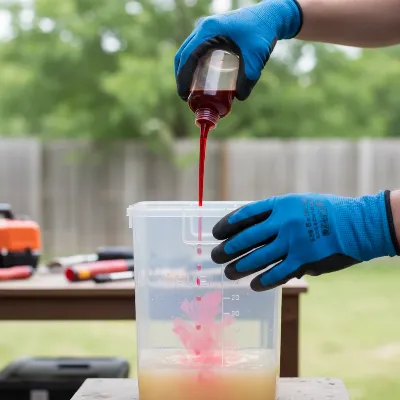 Person carefully pouring 2-stroke oil into a fuel container with gasoline, wearing gloves and safety glasses, in a well-ventilated outdoor setting.
Common Mixing Mistakes and How to Avoid Them
Even seasoned gardeners can make mistakes when it comes to fuel mixing. Being aware of these common pitfalls can save you time, money, and engine headaches.
- Incorrect Ratio (Too Much or Too Little Oil): This is the most frequent error.
- Too Little Oil: Leads to inadequate lubrication, causing excessive friction, overheating, and rapid engine wear, potentially leading to piston seizure and permanent damage. The engine might run hotter and sound different.
- Too Much Oil: Results in excessive smoke, carbon buildup on the spark plug, exhaust port, and piston crown. This can cause hard starting, reduced power, fouled spark plugs, and can even gum up the carburetor, requiring frequent cleaning. Always double-check your manual and measure accurately.
- Using Old or Stale Fuel: Gasoline can degrade in as little as 30 days, especially if exposed to air. Stale fuel loses its volatility, leading to poor combustion, hard starting, and gummy residues that clog fuel system components. Always use fresh gasoline. If you anticipate storing mixed fuel for longer than 30 days, consider adding a fuel stabilizer specifically designed for 2-stroke mixes. Even with a stabilizer, try to use it within 6-12 months.
- Wrong Oil Type: Using 4-stroke engine oil or automotive oils will not provide the proper lubrication for a 2-stroke engine, inevitably leading to engine failure. Always use high-quality 2-stroke oil designed for air-cooled small engines.
- Mixing Directly in the Engine’s Fuel Tank: Attempting to mix fuel and oil directly in the trimmer’s small fuel tank often results in an incomplete or inaccurate mix. The oil may not fully disperse, leading to areas of the engine receiving insufficient lubrication. Always use a separate, larger container for mixing.
- Ignoring Safety Precautions: Fuel is highly flammable. Mixing in enclosed spaces, near heat sources, or without proper ventilation is extremely dangerous. Always wear appropriate personal protective equipment (gloves, eye protection) and work in a well-ventilated outdoor area.
Proper Storage and Maintenance of Your Fuel Mix
Once you’ve expertly mixed your 2-stroke fuel, proper storage is essential to maintain its integrity and your safety.
Mixed fuel has a limited shelf life. Generally, it’s recommended to use mixed fuel within 30 days. Beyond this period, the gasoline components can begin to break down, and ethanol (if present) can absorb moisture, leading to phase separation and a degraded fuel quality that harms your engine. Store your mixed fuel in a clearly labeled, airtight, fuel-approved container in a cool, dry, and dark place, away from direct sunlight and any potential ignition sources. Keep it out of reach of children and pets.
For long-term storage of your string trimmer (e.g., over winter), it’s best to drain the fuel tank completely and run the engine until it stops. This ensures no stale fuel is left in the carburetor or fuel lines, preventing clogs and damage. If you must store mixed fuel for longer periods, a fuel stabilizer can extend its life, often up to 6 to 12 months, but always check the product label for specific guidelines. Never store fuel inside your home or living spaces.
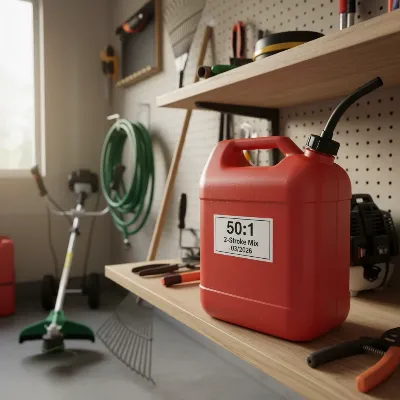 A neatly labeled red fuel can filled with mixed 2-stroke fuel, stored in a cool, dry shed or garage with other gardening tools in the background.
Frequently Asked Questions
How long can I store mixed 2-stroke fuel?
It is generally recommended to use mixed 2-stroke fuel within 30 days. After this period, the gasoline can begin to degrade, and ethanol (if present) can absorb moisture, leading to fuel separation and potential engine damage. Using a fuel stabilizer can extend the shelf life, typically up to 6-12 months.
Can I use car oil in my 2-stroke string trimmer?
No, you absolutely should not use car oil (4-stroke engine oil) in your 2-stroke string trimmer. 2-stroke engines require specific oil formulations designed to mix with gasoline and lubricate components that 4-stroke oils are not designed for. Using the wrong oil will lead to inadequate lubrication, severe engine wear, and likely engine failure.
What happens if I use too much or too little oil?
Using too little oil will cause insufficient lubrication, leading to excessive friction, overheating, and potential engine seizure. Too much oil can result in excessive smoke, carbon buildup on the spark plug and exhaust, hard starting, and reduced engine performance. Always adhere strictly to your manufacturer’s recommended ratio.
What octane gas should I use?
Most 2-stroke string trimmers perform optimally with fresh, unleaded gasoline with a minimum octane rating of 89 (or 90 RON). Higher octane fuels are usually unnecessary unless specified by your owner’s manual and will not provide a performance advantage for most small engines.
Are pre-mixed fuels a good alternative?
Yes, pre-mixed 2-stroke fuels (like Stihl MotoMix or Husqvarna XP Power) are an excellent alternative, especially for convenience and long-term storage. They typically use high-quality, ethanol-free gasoline blended with premium synthetic 2-stroke oil at the correct ratio. They often have a much longer shelf life (up to 2 years or more) compared to DIY mixed fuel.
Frequently Asked Questions
How long can I store mixed 2-stroke fuel for my string trimmer?
It is generally recommended to use mixed 2-stroke fuel within 30 days. After this period, gasoline components degrade, and ethanol can absorb moisture, leading to fuel separation. A fuel stabilizer can extend the shelf life to 6-12 months.
Can I use car engine oil in my 2-stroke string trimmer?
No, you should not use car oil (4-stroke engine oil) in your 2-stroke string trimmer. These engines require specific 2-stroke oil formulations for proper lubrication. Using the wrong oil will lead to inadequate lubrication, severe engine wear, and likely engine failure.
What are the consequences of using too much or too little oil in the fuel mix?
Using too little oil causes insufficient lubrication, leading to excessive friction, overheating, and potential engine seizure. Too much oil results in excessive smoke, carbon buildup on the spark plug and exhaust, hard starting, and reduced engine performance. Always adhere strictly to your manufacturer's recommended ratio.
What octane gasoline is best for a 2-stroke string trimmer?
Most 2-stroke string trimmers perform optimally with fresh, unleaded gasoline with a minimum octane rating of 89 (or 90 RON). Higher octane fuels are usually unnecessary unless specified by your owner's manual and will not provide a performance advantage for most small engines.
Are pre-mixed 2-stroke fuels a good alternative to DIY mixing?
Yes, pre-mixed 2-stroke fuels like Stihl MotoMix are an excellent alternative for convenience and long-term storage. They typically use high-quality, ethanol-free gasoline blended with premium synthetic 2-stroke oil at the correct ratio, often offering a shelf life of up to 2 years or more.
Get our weekly buyer guide
Practical specs, not advice. Unsubscribe anytime.

This was super helpful for understanding why my 2-stroke needs oil in the gas, unlike my lawnmower. I used to just grab whatever 2-stroke oil was on sale, but now I understand the specific lubrication needs. My trimmer feels like it has more power, and I’m confident I’m not causing carbon buildup.
I’ve always just eyeballed my fuel mix, but after reading about the importance of the 50:1 ratio, I decided to be more precise. My old trimmer was sputtering a bit, and I think it was due to an inconsistent mix. Now it runs like new, and I’m not worried about engine seizure anymore. Definitely worth taking the time to get it right.
I’m new to owning a string trimmer and was totally confused about the fuel situation. This explained everything clearly, especially the part about 2-stroke engines not having a separate oil reservoir. My trimmer is a beast now, and I feel much more confident mixing the fuel myself.
Good info on the different ratios like 40:1 and 32:1, but I wish there was a quick reference chart for common brands. I had to dig out my manual to double-check my specific model. It’s a minor thing, but it would make it even more convenient for quick checks before mixing.