A flooded gas string trimmer engine, characterized by an excess of fuel in the combustion chamber, can be quickly revived using a simple, tool-free DIY method. This process involves maximizing airflow by setting the choke to the “off” or “run” position and holding the throttle wide open, then repeatedly pulling the starter cord to expel the unburnt fuel. This common issue, often caused by improper choke or primer bulb use, can typically be resolved in just a few minutes, allowing the engine to ignite properly.
Understanding a Flooded String Trimmer Engine
A flooded engine simply means there’s an excess of gasoline in the combustion chamber, leading to a fuel-to-air mixture that’s too rich to ignite. This abundance of fuel can “wet” the spark plug, making it unable to create the necessary spark for combustion. You might notice a strong smell of gasoline emanating from the muffler, or the engine may simply refuse to fire up, even after repeated pulls. Sometimes, you’ll experience what’s known as “hydraulic lock,” where the piston can’t complete its compression stroke due to too much liquid fuel, making the starter cord incredibly difficult to pull.
Several factors commonly lead to a flooded string trimmer engine. The most frequent culprit is improper use of the choke or primer bulb. Over-choking, especially when the engine is already warm, or repeatedly pressing the primer bulb too many times, introduces an excessive amount of fuel into the carburetor and engine. Other contributing factors can include a weak or fouled spark plug, stale fuel, or an improperly adjusted carburetor, all of which hinder proper combustion and can cause fuel to accumulate.
The Quick DIY Method to Unflood Your String Trimmer
When your gas string trimmer is flooded, a straightforward, tool-free procedure can often resolve the issue quickly. This method focuses on maximizing airflow to dry out the excess fuel and allow for proper ignition.
Step 1: Maximize Airflow
The first and most critical step is to ensure your engine can breathe. This involves opening up the carburetor to its fullest extent to allow a straight gush of air through.
First, set the choke to the “off” or “run” position. On some models, this might be indicated by a single vertical line or a specific “run” label. This action opens the choke plate, which normally restricts airflow during cold starts. Next, fully depress the throttle trigger and hold it in the “wide open” position. This opens the throttle butterfly valve, further maximizing the air intake. By doing both, you are effectively forcing the carburetor to deliver the leanest possible fuel-to-air mixture, which is essential for clearing the flood.
Step 2: Clear Excess Fuel
|
Our Picks for the Best String Trimmer in 2026
As an Amazon Associate I earn from qualifying purchases.
|
||
| Num | Product | Action |
|---|---|---|
| 1 | Cordless String Trimmer Compatible with Dewalt 20V MAX Battery, 12-Inch Weed Wacker Cordless Auto Line Feed,Electric Weed Eater Battery Powered Grass Trimmer w/6 Line Spools(Tool Only) |

|
| 2 | WORX Cordless String Trimmer & Lawn Edger, 12'' Electric Weed Wacker with 4.6 LBS, 20V Weed Eater with 90° Pivoting Head, Batteries & Charger Not Included, WG170.9 |
|
| 3 | BLACK+DECKER 20V MAX Weed Eater, Edger and Sweeper Combo, Includes 2 Batteries and Charger, Cordless Electric Weed Wacker and 130 Mph Hard Surface Leaf Blower, 10 in. (LCC222) |
|
| 4 | WORX Cordless String Trimmer & Lawn Edger, 12'' Electric Weed Wacker with 5.5 LBS, 20V Weed Eater with 90° Pivoting Head, Battery & Charger Included, WG170.2 |
|
| 5 | CRAFTSMAN WEEDWACKER® String Trimmer, 6.5 Amp, 14-Inch (CMEST913) |
|
| 6 | BLACK+DECKER String Trimmer, Electric, 14-inch (BESTE620) |
|
| 7 | 20V 12" Cordless String Trimmer With 2 X 4.0Ah Battery and Charger, Electric Grass Trimmer Battery Powered Eater String, Edger Lawn Tool Grass Cutter With 8pcs Line, Lawn Mover For Garden Yard, Orange |
|
| 8 | Houselife 12" Cordless Weed Eater Compatible with Dewalt 20V Max Battery (No Battery), Auto Feed Cordless String Trimmer&Weed Wacker, Lightweight Electric 20V Weed Trimmer&Edger for Lawn, Garden, Yard |
|
| 9 | Cordless String Trimmer Compatible with Milwaukee M18 18V Battery(Tool Only), 12-Inch 3-in-1 Weed Eater with 8500RPM Upgraded Motor, Automatic Line Feed Weed Wacker for Lawn Edging and Mowing-Red |
|
| 10 | BLACK+DECKER Weed Wacker with Auto Feed, 14-Inch 2 in 1 String Trimmer Lawn Edger, Powerful 6.5-Amp Lightweight Electric Weed Eater (BESTA510) |
|
With maximum airflow established, the next step is to physically clear the excess fuel from the engine’s combustion chamber and dry the spark plug.
While continuously holding the throttle wide open, pull the starter cord repeatedly and quickly. You don’t need to pull it excessively hard, but maintain a fast, consistent motion. The goal here is to rapidly cycle the engine, pushing the unburnt fuel out through the exhaust system. If you initially encounter resistance or feel the hydraulic lock, keep pulling. Each pull helps to expel some of the liquid gasoline, gradually reducing the rich mixture. Continue pulling until the engine sputters or attempts to fire, and eventually, it should turn over and start.
Optional Enhancement: Remove Air Filter
For a particularly stubborn flood or to expedite the process, you can temporarily remove the air filter. This provides an even greater volume of air directly to the carburetor, helping to dry out the fuel mixture more rapidly.
Simply locate and unclip or unscrew your trimmer’s air filter cover, then remove the filter element. Once removed, proceed with Step 2 (holding the throttle wide open and pulling the cord). The increased airflow will aid in evaporating and expelling the excess fuel. As soon as the engine starts and runs smoothly, to turn it off, reinstall the air filter, and secure its cover. Operating the trimmer without an air filter for extended periods can allow dirt and debris to enter the engine, causing damage.
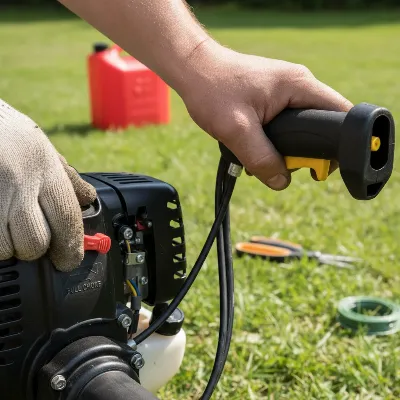 A person demonstrating how to unflood a gas string trimmer engine by adjusting the choke and holding the throttle wide open, set in a backyard environment with gardening tools in the background.
When Your Trimmer Still Won’t Start: Deeper Troubleshooting
If the quick DIY method doesn’t immediately solve your flooded engine problem, it might indicate a more deeply saturated condition or another underlying issue. Before resorting to professional help, a few additional checks can often get your trimmer roaring back to life.
Inspect the Spark Plug
The spark plug is the heart of ignition, and a severely flooded engine can leave it thoroughly soaked and fouled with fuel and carbon. If the quick unflooding steps didn’t work, it’s time to inspect the spark plug directly. Carefully remove the spark plug using a spark plug wrench. Once removed, visually inspect it. Is it wet with fuel? Is there heavy carbon buildup?
If it’s wet, clean and dry the spark plug with a clean rag. For carbon buildup, use a wire brush or fine-grit sandpaper to gently clean the electrodes. Always ensure the gap between the electrodes is correct (consult your trimmer’s manual for specifications). If the spark plug appears corroded, significantly worn, or heavily fouled, it’s often best to replace it with a new one; they are inexpensive and crucial for reliable starting. When reinstalling, make sure it’s tightened correctly, but avoid over-tightening.
A critical safety note: If you crank the engine with the spark plug removed, ensure the spark plug cap is positioned far away from the engine head to prevent any accidental sparks from igniting fuel vapors.
Check Fuel and Air Filter
Sometimes, persistent flooding or starting issues can stem from the fuel itself or a clogged air filter, compounding the problem.
Ensure you are using fresh, properly mixed fuel for your 2-stroke string trimmer. Old fuel, especially ethanol-blended gasoline left sitting for extended periods, can degrade and cause starting difficulties. If your fuel is older than a few weeks or months, consider draining it and refilling with fresh fuel.
Similarly, a dirty or clogged air filter restricts proper airflow, making the engine run rich even under normal conditions and exacerbating flooding issues. While you might have removed it for the unflooding process, take the time to inspect it thoroughly. If it’s heavily soiled, either clean it according to manufacturer instructions (often with soap and water for foam filters) or replace it. A clean air filter ensures the engine gets the optimal air-to-fuel ratio, reducing the likelihood of future flooding.
Preventing Future String Trimmer Flooding
Preventing your string trimmer from flooding in the first place is always better than fixing it. Implementing proper starting techniques and regular maintenance can save you a lot of frustration and keep your trimmer running smoothly for years.
The most common cause of flooding is incorrect starting procedures. Always follow your manufacturer’s specific instructions, but generally, avoid over-choking. Use the choke only for cold starts, and switch it off to the “run” position as soon as the engine shows signs of firing or after a few pulls. If your trimmer has a primer bulb, resist the urge to press it more than the recommended 3-5 times. Over-priming is a sure way to flood the engine, especially if it’s already warm. the goal is to introduce just enough fuel to help a cold engine start, not drench it.
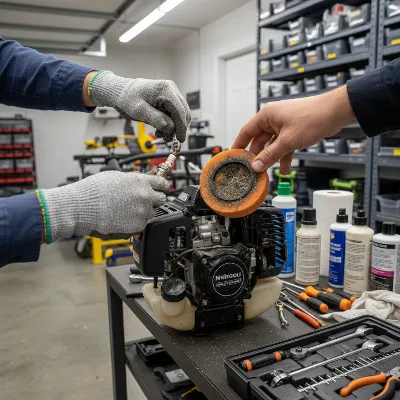 A person performing routine maintenance on a string trimmer, checking the spark plug and cleaning the air filter, with a focus on preventative care in a workshop setting.
Regular maintenance is also key to preventing flooding and ensuring reliable operation. Make it a habit to check and replace your spark plug annually or whenever you notice starting issues. Spark plugs are consumables and their performance degrades over time. Similarly, regularly inspect and clean your air filter. A clean filter ensures optimal air intake, which is critical for the correct fuel-to-air mixture. If you’re comfortable, you can also check your carburetor’s adjustment screws, although for most users, routine cleaning and fresh fuel are usually sufficient.
Finally, always use fresh fuel and the correct fuel-to-oil mixture if you have a 2-stroke engine. Stale gasoline can lead to poor combustion and gum up your carburetor. Store fuel in approved containers and use it within a few weeks or months. Proper fuel and timely maintenance are the best defenses against a flooded string trimmer and many other common engine woes.
Conclusion
Dealing with a flooded gas string trimmer can be a momentary nuisance, but armed with the right knowledge, it’s a problem easily overcome. By understanding the core principle of too much fuel and applying the simple steps of maximizing airflow—turning off the choke, holding the throttle wide open, and pulling the starter cord repeatedly—you can quickly get your trimmer back in action without needing any specialized tools. prevention is always easier than a cure. Adopting proper starting habits and committing to regular maintenance, like checking your spark plug and air filter, will significantly reduce your chances of encountering a flooded engine. So, the next time your trimmer decides to take an unannounced break, you’ll know exactly how to bring it back to life and keep your lawn looking pristine. What’s your go-to trick for a stubborn, flooded engine?
Frequently Asked Questions
Why does my string trimmer flood so easily?
String trimmers often flood due to over-choking during startup, especially when the engine is already warm, or by excessive use of the primer bulb. These actions introduce too much fuel into the engine, creating an overly rich air-fuel mixture that the spark plug cannot ignite effectively. A dirty air filter or old fuel can also contribute to the problem.
Can a flooded engine damage my trimmer?
While typically not causing permanent damage with a quick fix, repeatedly flooding an engine can lead to issues. Excess fuel can wash away the lubricating oil from the cylinder walls, increasing wear over time. If left flooded for extended periods, fuel can also degrade internal components. Addressing a flooded engine promptly is always recommended.
How long should I wait after flooding before trying again?
If you’ve attempted the unflooding procedure and it hasn’t worked, waiting 10-15 minutes can allow some of the excess fuel to naturally evaporate. However, the quick DIY method (choke off, full throttle, repeated pulls) is designed to expel the fuel without needing a long wait. If the quick method fails, a mechanical check of the spark plug is the next step.
Do I need to remove the spark plug to unflood it?
In many cases, you do not need to remove the spark plug to unflood a gas string trimmer. The “choke off, full throttle, pull cord” method often works on its own by drying out the plug and expelling excess fuel. However, if the engine remains flooded after several attempts, removing, cleaning, and drying the spark plug can significantly speed up the process.
Get our weekly buyer guide
Practical specs, not advice. Unsubscribe anytime.

My old gas trimmer always gives me trouble starting, especially if I prime it too much. The tip about holding the throttle wide open and pulling the cord really worked. I used to just let it sit for ages, but this method got it going in under five minutes. So glad I found this, it saved me a lot of frustration this morning.
This is a lifesaver! My Ryobi trimmer was completely flooded after I accidentally over-primed it. The explanation about the ‘wet’ spark plug made perfect sense. Following the steps to maximize airflow and clear the excess fuel worked like a charm. It fired right up after about 7-8 pulls. Highly recommend this method.
I’ve definitely flooded my trimmer before by messing up the choke settings. The instructions here for setting the choke to ‘off’ or ‘run’ and then pulling the cord were clear. It took a few more pulls than I expected, maybe 10-12, but it eventually sputtered to life. Good to have a reliable method for when I inevitably do it again.
I tried this on my Husqvarna trimmer that smelled strongly of gas from the muffler. It did eventually start, but it took quite a bit of effort and my arm was tired from all the pulling. I wish there was a way to prevent the flooding in the first place, but for a quick fix, it’s okay. Next time I’ll be more careful with the primer bulb.