Straight shaft string trimmers are essential tools for precise lawn care, offering extended reach, better visibility, and often more power than curved shaft models. They are ideal for tackling tough weeds, overgrown areas, and maintaining pristine landscapes around obstacles and edges. This guide details the top 5 models for 2026, including gas-powered options like the Stihl FS 91 R and battery-powered choices such as the EGO Power+ ST1521S, ensuring you select the best tool for your specific needs.
String Trimmer: Overview and Optimal Selection
A string trimmer, also commonly known as a weed eater or weed wacker, is a versatile gardening tool designed to cut grass and weeds in areas that lawnmowers can’t reach, such as fence lines, around trees, garden beds, and along sidewalks. While curved shaft models are often lighter and more compact, straight shaft string trimmers are generally preferred for their superior balance, durability, and ability to handle more demanding tasks, including those requiring brush cutter attachments. Their longer shaft means less bending, reducing back strain, and the direct drive from the engine to the head often results in more efficient power transfer.
The market offers three primary types of string trimmers, each with its unique advantages and disadvantages: For compare top gas on this site.
- Gas-Powered String Trimmers: These are the workhorses of the trimming world, offering the most power and longest runtimes. They are ideal for large properties, tough brush, and commercial use where consistent performance is critical. Gas models typically come in 2-cycle (lighter, simpler, requires fuel mixing) and 4-cycle (heavier, no fuel mixing, quieter, less emissions) options. However, they are generally heavier, louder, require more maintenance, and produce exhaust fumes.
- Battery-Powered String Trimmers: Gaining immense popularity, battery-powered string trimmers offer cordless convenience without the noise, fumes, or maintenance of gas models. They start instantly with the push of a button and are significantly lighter. Advancements in battery technology mean many modern battery trimmers can rival gas models in power for typical homeowner tasks, though runtime is limited by battery capacity and charge time. They are perfect for medium-sized yards and those prioritizing ease of use and environmental friendliness.
- Corded Electric String Trimmers: These models are the lightest and typically the least expensive. They offer unlimited runtime as long as they are plugged into an outlet, making them suitable for small yards where an extension cord is not an inconvenience. Their main drawback is limited mobility and the constant need to manage a power cord, which can be a tripping hazard or easily cut. For straight shaft models, corded options are less common but still exist for specific niche applications.
Understanding these distinctions is the first step in selecting a straight shaft string trimmer that aligns perfectly with your yard size, vegetation type, and personal preferences for power and convenience.
Detailed String Trimmer Buying Guide
Choosing the right straight shaft string trimmer involves carefully considering several factors beyond just the power source. These elements collectively determine the tool’s effectiveness, ease of use, and overall value.
Engine Type
|
Our Picks for the Best String Trimmer in 2026
As an Amazon Associate I earn from qualifying purchases.
|
||
| Num | Product | Action |
|---|---|---|
| 1 | Cordless String Trimmer Compatible with Milwaukee M18 18V Battery(Tool Only), 12-Inch 3-in-1 Weed Eater with 8500RPM Upgraded Motor, Automatic Line Feed Weed Wacker for Lawn Edging and Mowing-Red |

|
| 2 | BLACK+DECKER 20V MAX Weed Eater, Edger and Sweeper Combo, Includes 2 Batteries and Charger, Cordless Electric Weed Wacker and 130 Mph Hard Surface Leaf Blower, 10 in. (LCC222) |
|
| 3 | CRAFTSMAN WEEDWACKER® String Trimmer, 6.5 Amp, 14-Inch (CMEST913) |
|
| 4 | BLACK+DECKER String Trimmer, Electric, 14-inch (BESTE620) |
|
| 5 | Houselife 12" Cordless Weed Eater Compatible with Dewalt 20V Max Battery (No Battery), Auto Feed Cordless String Trimmer&Weed Wacker, Lightweight Electric 20V Weed Trimmer&Edger for Lawn, Garden, Yard |
|
| 6 | WORX Cordless String Trimmer & Lawn Edger, 12'' Electric Weed Wacker with 4.6 LBS, 20V Weed Eater with 90° Pivoting Head, Batteries & Charger Not Included, WG170.9 |
|
| 7 | Cordless String Trimmer Compatible with Dewalt 20V MAX Battery, 12-Inch Weed Wacker Cordless Auto Line Feed,Electric Weed Eater Battery Powered Grass Trimmer w/6 Line Spools(Tool Only) |
|
| 8 | 20V 12" Cordless String Trimmer With 2 X 4.0Ah Battery and Charger, Electric Grass Trimmer Battery Powered Eater String, Edger Lawn Tool Grass Cutter With 8pcs Line, Lawn Mover For Garden Yard, Orange |
|
| 9 | WORX Cordless String Trimmer & Lawn Edger, 12'' Electric Weed Wacker with 5.5 LBS, 20V Weed Eater with 90° Pivoting Head, Battery & Charger Included, WG170.2 |
|
| 10 | BLACK+DECKER Weed Wacker with Auto Feed, 14-Inch 2 in 1 String Trimmer Lawn Edger, Powerful 6.5-Amp Lightweight Electric Weed Eater (BESTA510) |
|
The engine or motor type is fundamental to a string trimmer’s performance. As discussed, gas engines provide maximum power, with 2-cycle engines being lighter and more agile, while 4-cycle engines offer smoother operation and eliminate fuel mixing. For battery-powered models, the voltage (V) and amp-hours (Ah) of the battery are crucial indicators of power and runtime. Higher voltage usually means more power, while higher amp-hours mean longer operation time between charges. Many premium battery trimmers now feature brushless motors, which are more efficient, provide more torque, and have a longer lifespan than brushed motors.
Power and Performance
The raw power of your string trimmer directly impacts its ability to cut through various types of vegetation. For gas models, engine displacement (measured in cubic centimeters or cc) indicates power; higher cc usually means more power. For battery models, both voltage and the motor’s design contribute to performance. The cutting swath, which is the diameter of the area the trimmer head clears with each pass, also affects how quickly you can complete your work. A larger cutting swath means fewer passes and faster job completion, especially in open areas. Consider features like variable speed triggers, which allow you to adjust the power for different tasks, from delicate edging to aggressive weed clearing.
Cutting Head and Line
The cutting head is where the magic happens, and there are several types to consider. Most string trimmers use a bump feed head, where you tap the head on the ground to advance more line. This is convenient but can sometimes lead to excessive line consumption. Fixed line heads require you to manually insert pre-cut line pieces, offering durability but slower reloading. Auto-feed heads automatically dispense line as it wears down, providing great convenience but sometimes less control over line length. The type and diameter of the trimmer line are also vital. Thicker lines (e.g., 0.095 inches or more) are more durable and effective for tougher weeds and brush, while thinner lines (e.g., 0.065 inches) are suitable for lighter grass and delicate trimming. Ensure the trimmer can accommodate the line diameter you need for your typical tasks.
Additional Features
Modern straight shaft string trimmers come equipped with a variety of features designed to enhance user comfort, safety, and versatility. Look for ergonomic designs, such as adjustable handles or anti-vibration systems, which significantly reduce user fatigue during prolonged use. Attachment-capable models offer incredible versatility, allowing you to convert your trimmer into a pole saw, edger, cultivator, or blower by simply swapping out the lower shaft. Safety features like protective guards and easy-to-reach stop switches are also important. For gas models, easy starting systems (e.g., spring-assisted starts, primer bulbs) can make a big difference in convenience.
Comparison Table of the Best Straight Shaft String Trimmers
Here’s a comparison of some of the top straight shaft string trimmers that stand out for their performance, reliability, and user satisfaction, making them excellent choices:
| Product Name | Engine Type | Power/Specs | Pros | Cons | Price Range (Estimated) |
|---|---|---|---|---|---|
| Stihl FS 91 R | Gas (2-cycle) | 28.4 cc / 1.3 HP | Exceptional power, professional-grade, durable, fuel-efficient | Heavier, higher price point, requires fuel mixing | $350 – $450 |
| Husqvarna 128LDx | Gas (2-cycle) | 28 cc / 1.0 HP | Attachment capable, good balance, easy starting, versatile | Less powerful than pro models, slightly louder | $200 – $280 |
| EGO Power+ ST1521S | Battery | 56V 2.5Ah/5.0Ah, Brushless | Carbon fiber shaft, strong power, quiet, rapid charger, low vibration | Shorter runtime with smaller battery, higher initial cost | $250 – $350 (w/battery) |
| DeWalt DCST972X1 | Battery | 60V MAX 3.0Ah, Brushless | High torque, excellent for dense brush, robust build, interchangeable battery | Heavier than some battery models, battery sold separately sometimes | $280 – $400 (w/battery) |
| Ryobi RY40270VNM | Battery | 40V 4.0Ah, Brushless | Great value, compatible with Ryobi 40V system, good power for homeowners | Less power than premium battery models, not for very heavy duty | $180 – $250 (w/battery) |
Detailed Reviews of the Top 5 Straight Shaft String Trimmers
Delving deeper into each of these top contenders reveals why they are highly recommended for various user needs.
Stihl FS 91 R String Trimmer
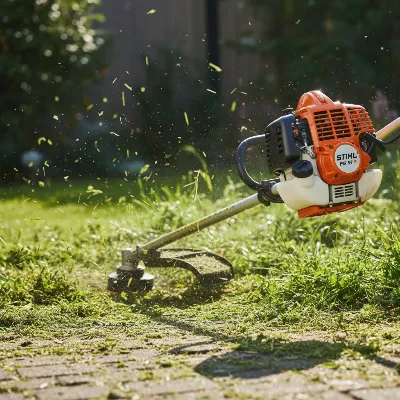 Stihl FS 91 R straight shaft string trimmer cutting dense grassThe Stihl FS 91 R stands as a benchmark for professional-grade string trimmers. Its 28.4 cc, 1.3 horsepower engine delivers formidable power, making quick work of thick grass, stubborn weeds, and even light brush. The “R” designation signifies a loop handle, which is excellent for maneuverability and working in confined spaces. Users consistently praise its exceptional durability, fuel efficiency, and robust construction designed to withstand rigorous use. While it’s a significant investment, the longevity and performance justify the cost for those who demand the best. The anti-vibration system also contributes to user comfort during extended operations, a crucial factor for professionals or large property owners.
Husqvarna 128LDx Straight Shaft Trimmer
The Husqvarna 128LDx is a popular choice for homeowners and those needing a versatile tool. Its 28 cc, 1.0 horsepower engine provides a good balance of power for typical yard work, without being overly heavy or cumbersome. A standout feature is its attachment-capable design, allowing you to easily swap the trimmer head for other tools like an edger, pole saw, or cultivator, enhancing its utility significantly. The “x” in its name often indicates an attachment-capable model. It’s known for its relatively easy starting system and comfortable, ergonomic design. While it may not tackle the absolute toughest brush as quickly as a Stihl, its versatility and reliability make it an excellent all-around straight shaft string trimmer.
EGO Power+ ST1521S String Trimmer
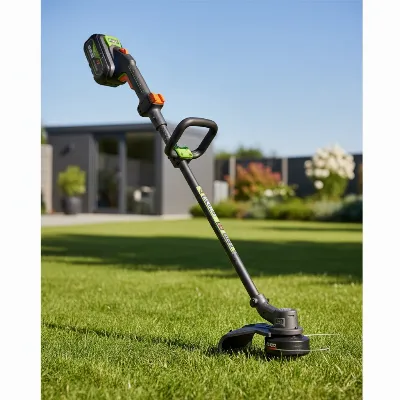 EGO Power+ ST1521S straight shaft string trimmer with batteryEGO Power+ has revolutionized battery-powered outdoor tools, and the ST1521S is a prime example. This trimmer boasts a powerful 56V brushless motor and a lightweight, durable carbon fiber shaft. It delivers impressive cutting power that rivals many gas models, making it suitable for larger properties where battery convenience is desired. The included rapid charger gets you back to work quickly, and its quiet operation and lack of fumes are major advantages. While the initial investment can be higher due to the battery and charger, the long-term savings on fuel and maintenance, coupled with exceptional performance, make it a top contender for those embracing cordless technology. Its smooth power delivery and low vibration further enhance the user experience.
DeWalt DCST972X1 String Trimmer
The DeWalt DCST972X1 leverages DeWalt’s robust 60V MAX battery platform to deliver serious power for a battery-powered string trimmer. Equipped with a high-efficiency brushless motor, this trimmer is specifically designed to tackle dense overgrowth and tough weeds with impressive torque. Its durable construction is characteristic of DeWalt tools, built to withstand demanding job site conditions, which translates well to heavy-duty yard work. The variable speed trigger provides precise control, allowing users to optimize power and runtime for different tasks. It’s an excellent choice for users already invested in the DeWalt 60V MAX system, or for those with larger properties who need reliable, gas-like power without the maintenance.
Ryobi RY40270VNM String Trimmer
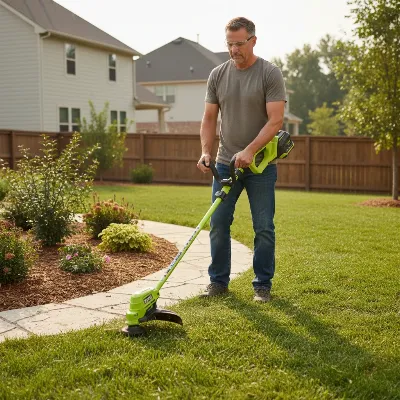 Ryobi RY40270VNM straight shaft string trimmer for home useThe Ryobi RY40270VNM offers an outstanding balance of performance and value within the battery-powered category. Utilizing the widely popular Ryobi 40V system, this trimmer is a fantastic option for homeowners with medium-sized yards. Its brushless motor provides ample power for everyday trimming tasks, and its straight shaft design ensures good reach and visibility. Users often praise its lightweight design and comfortable handling, making it less fatiguing for longer trimming sessions. For those looking for a reliable, convenient, and affordable entry into high-performance battery string trimmers, especially if you already own other Ryobi 40V tools, the RY40270VNM is an exceptional choice. It’s powerful enough for most residential needs, yet user-friendly and well-priced.
String Trimmer Usage and Maintenance Guide
Proper usage and regular maintenance are crucial for maximizing the performance and extending the lifespan of your straight shaft string trimmer. Neglecting these aspects can lead to poor cutting results, frequent breakdowns, and even safety hazards.
Preparation Before Use
Before each use, always prioritize safety. Wear appropriate personal protective equipment (PPE), including safety glasses or goggles, long pants, sturdy closed-toe shoes, and hearing protection, especially for gas models. Inspect your string trimmer for any visible damage, ensure all guards are securely in place, and check the condition of the trimmer line, replacing it if it’s too short or worn. For gas trimmers, ensure the fuel tank is filled with the correct fuel mixture (for 2-cycle engines) or fresh gasoline (for 4-cycle engines). For battery-powered models, confirm the battery is fully charged. Clearing the work area of any debris, rocks, or obstacles that could be thrown or damage the trimmer head is also a smart move.
Trimming Techniques
Effective trimming techniques not only yield better results but also enhance safety. Always hold the string trimmer firmly with both hands, maintaining a balanced stance. Use a sweeping, side-to-side motion, slowly moving into the grass or weeds. For edging, tilt the trimmer head so the line is perpendicular to the ground, allowing for a clean cut along sidewalks or driveways. Avoid “scalping” the lawn by keeping the cutting line slightly above the desired grass height. Be mindful of obstacles; keep the trimmer line away from trees, fences, and delicate plants to prevent damage. Using only the tip of the line to cut is often the most efficient method and helps prevent motor bogging down.
> “Mastering the ‘tip-cutting’ technique with your string trimmer not only conserves line but also drastically improves the efficiency and quality of your trim, making every pass count.” – Admin, reviewnpicks.com, String Trimmer Expert
Cleaning and Maintenance
After each use, clean your string trimmer thoroughly. Remove any grass clippings, dirt, or debris from the cutting head, shaft, and engine housing (for gas models). For battery models, wipe down the tool and battery terminals. Regularly check and replace the trimmer line as needed. For gas models, routine maintenance includes checking and cleaning the air filter, spark plug, and fuel filter. Refer to your owner’s manual for specific maintenance schedules and instructions, as they vary by model. Storing your trimmer in a clean, dry place, away from extreme temperatures, will help preserve its components and readiness for the next task. Proper battery care, like storing batteries partially charged and avoiding extreme temperatures, will also extend their life.
Where to Buy a String Trimmer?
When you’re ready to purchase a straight shaft string trimmer, you have several reliable options, both online and at physical retail locations. Each offers different advantages depending on your preferences.
Major home improvement stores like Home Depot, Lowe’s, and Ace Hardware are excellent places to start. They typically carry a wide selection of popular brands, allow you to physically inspect the trimmers, and often have knowledgeable staff to answer questions. You can also take advantage of in-store promotions and return policies. For professional-grade models like Stihl, you’ll often need to visit authorized dealers, which provide specialized service and support.
Online retailers such as Amazon, Walmart, and the official websites of manufacturers (e.g., EGO, DeWalt, Husqvarna) offer an even broader selection, often with competitive pricing and the convenience of home delivery. Shopping online allows you to easily compare models, read customer reviews, and access detailed specifications from the comfort of your home. Always ensure you purchase from reputable sellers, and check their shipping and return policies before finalizing your order. Regardless of where you choose to buy, ensure you’re getting a product that comes with a manufacturer’s warranty for peace of mind.
Conclusion
Selecting the best straight shaft string trimmer involves a thoughtful consideration of power source, performance, features, and your specific lawn care demands. Whether you opt for the raw power of a gas-powered Stihl, the versatility of a Husqvarna, or the modern convenience of battery models like EGO, DeWalt, or Ryobi, there’s a perfect straight shaft string trimmer out there for you. By following this guide and prioritizing your needs, you can confidently invest in a tool that will keep your yard looking immaculate for years to come. Proper usage and consistent maintenance are key to unlocking the full potential and longevity of your chosen string trimmer.
What features do you prioritize most when considering a new straight shaft string trimmer for your yard?
Frequently Asked Questions
Frequently Asked Questions
What is the primary advantage of a straight shaft string trimmer over a curved shaft?
Straight shaft string trimmers offer better reach under bushes and around obstacles due to their longer shaft. They also generally provide more power and durability, making them more suitable for heavy-duty tasks and often compatible with various attachments like edgers or brush cutters.
How often should I replace the line on my string trimmer?
The frequency of line replacement depends on usage, vegetation type, and line diameter. Generally, you should replace the line when it becomes too short to effectively cut or shows signs of excessive wear and fraying. Keeping fresh line ensures optimal cutting performance.
Can I use different attachments with my straight shaft trimmer?
Many straight shaft string trimmers, particularly from brands like Husqvarna and some battery-powered models, are designed to be attachment-capable. This means you can swap the trimmer head for other gardening tools such as edgers, pole saws, cultivators, or blowers, greatly increasing the versatility of your single powerhead.
What's the best string trimmer for a large yard with tough weeds?
For large yards with dense, tough weeds or brush, a powerful gas-powered straight shaft string trimmer like the Stihl FS 91 R or a high-voltage battery model such as the DeWalt DCST972X1 or EGO Power+ ST1521S is usually recommended. These offer the power and runtime needed to tackle demanding conditions without frequent stops.
How do I choose the right line diameter for my string trimmer?
The right line diameter depends on the toughness of the vegetation you need to cut. Thinner lines (0.065 to 0.080 inches) are suitable for light grass. Medium lines (0.080 to 0.095 inches) are good for general lawn maintenance and light weeds. Thicker lines (0.095 inches and up) are best for heavy weeds, dense grass, and brush. Always check your trimmer's manual for recommended line sizes.
Are battery-powered string trimmers powerful enough for professional use?
While many battery-powered string trimmers offer impressive power for homeowners and lighter commercial tasks, true professional-grade work often still leans towards gas models for their extended runtime and unwavering power in continuous, heavy-duty applications. However, advanced battery systems are rapidly closing the gap, with some models now suitable for certain professional jobs.
How to Use and Maintain Your Straight Shaft String Trimmer
Proper usage and regular maintenance are crucial for maximizing the performance and extending the lifespan of your straight shaft string trimmer, ensuring safety and optimal cutting results.
Before each use, wear safety glasses, long pants, sturdy shoes, and hearing protection. Inspect the trimmer for damage, ensure guards are secure, and check the trimmer line. For gas models, confirm the correct fuel mixture; for battery models, ensure a full charge. Clear the work area of debris.
Hold the trimmer firmly with both hands and maintain a balanced stance. Use a sweeping, side-to-side motion, slowly moving into grass or weeds. For edging, tilt the head so the line is perpendicular to the ground. Avoid 'scalping' the lawn and keep the line away from obstacles like trees and fences. Use only the tip of the line for efficient cutting.
After each use, thoroughly clean grass clippings and debris from the cutting head, shaft, and engine housing. For battery models, wipe down the tool and battery terminals. Regularly check and replace the trimmer line. For gas models, clean the air filter, spark plug, and fuel filter according to the owner's manual. Store the trimmer in a clean, dry place away from extreme temperatures.
Get our weekly buyer guide
Practical specs, not advice. Unsubscribe anytime.

I picked up one of the mid-range gas models mentioned, hoping for something that could handle my overgrown fence line. It does the job, but it’s a bit louder than I anticipated, and starting it can be a bit finicky sometimes. It definitely has the power for tough weeds, but I wish it was a little easier to get going on the first pull. Still, it beats my old electric one.
As a homeowner with a lot of obstacles in my yard, a straight shaft trimmer was a must. The visibility it offers when trimming around trees and along the driveway is fantastic. I appreciate the breakdown of gas vs. battery options; it helped me confirm my choice for a gas-powered model for its consistent power. My lawn has never looked so neat and tidy!
I finally upgraded to a straight shaft trimmer after years of struggling with a curved one, and what a difference! The extended reach is a game-changer for getting under bushes and around my raised garden beds without straining my back. I went with the Stihl FS 91 R, and it’s been a beast for my acre property. Definitely worth the investment for serious yard work.
I was on the fence about going battery-powered, but the EGO Power+ ST1521S really impressed me. It has plenty of power for my suburban yard, and I love not having to deal with gas or cords. The battery life is decent for about 45 minutes of continuous trimming, which is usually enough for me. My only minor complaint is that it’s a bit heavier than I expected.