Achieving a perfectly manicured lawn, complete with crisp edges and weed-free perimeters, brings a unique sense of satisfaction. While a lawnmower handles the main expanse, the intricate work of trimming around obstacles, garden beds, and fences demands a specialized tool. This is where a high-quality string trimmer becomes indispensable. Among the various options, 4-stroke gas string trimmers stand out for their robust power, operational smoothness, and user-friendly features. If you’re seeking a reliable and efficient solution for demanding yard work without the hassle of mixing fuel, a 4-stroke model might be your ideal choice. This guide delves into the world of these powerful machines, helping you navigate the options and select the perfect string trimmer for your property in 2026.
Understanding 4-Stroke Gas String Trimmers: An Overview
A string trimmer, often called a weed eater or weed wacker, uses a rapidly spinning line to cut grass and weeds in areas inaccessible to a lawnmower. While electric (corded and cordless) and 2-stroke gas trimmers are common, 4-stroke gas models offer distinct advantages for homeowners and professionals alike. They operate on a four-cycle engine, meaning they complete four piston strokes (intake, compression, power, exhaust) for each power stroke, leading to a different performance profile.
The primary benefit of a 4-stroke gas string trimmer is its convenience; it runs on straight, unleaded gasoline, eliminating the need for oil and gas mixing. This not only simplifies fueling but also results in cleaner emissions compared to 2-stroke engines. Owners often appreciate the quieter operation and smoother running, which translates to less vibration and reduced user fatigue during extended use. Furthermore, 4-stroke engines typically offer better low-end torque, making them effective for tackling thicker grass and stubborn weeds. Their more complex design often contributes to greater durability and a longer lifespan, featuring heavy-duty parts built for resilience.
However, these benefits come with certain considerations. Four-stroke engines are generally heavier due to their more intricate internal components, which can impact maneuverability for some users. The initial purchase price is usually higher than that of 2-stroke counterparts. Unlike 2-stroke engines, 4-stroke trimmers should not be inverted or tilted at extreme angles, as this can cause oil to leak or flow into unintended areas, potentially damaging the engine. Regular oil changes are also a necessity to maintain engine health, adding a step to routine maintenance not found in 2-stroke models. Despite these points, for many, the advantages of fuel simplicity, reduced noise, and smooth power outweigh the minor drawbacks.
 A professional using a 4-stroke gas string trimmer to edge a lawn with precision, showcasing its power and maneuverability
Your Comprehensive Guide to Buying a 4-Stroke String Trimmer
Choosing the right 4-stroke gas string trimmer involves more than just picking a brand. Several key factors contribute to a trimmer’s performance, comfort, and suitability for your specific yard care needs. Considering these elements will help you make an informed decision and invest in a tool that truly performs.
Engine Type & Power
The heart of any gas string trimmer is its engine, and for 4-stroke models, cubic centimeters (cc) indicate power output. Engines typically range from 25cc to 30cc, with higher cc ratings generally providing more power for dense vegetation. Leading brands like Honda are renowned for their robust and reliable 4-stroke engines, which are often found in premium trimmers. Evaluate the size and toughness of your typical trimming tasks to match the engine power accordingly.
Cutting Swath and Line Type
The cutting swath, or the width the trimmer covers in a single pass, typically ranges from 17 to 18 inches for most gas models, impacting how quickly you can complete a job. The trimmer line itself is crucial; line diameter often ranges from 0.080 to 0.095 inches for residential use, while heavier-duty tasks might call for thicker lines. Line shape also matters, with options like round, twisted, square, or star-shaped, each offering different cutting characteristics. Finally, consider the trimmer head type—common designs include bump feed (for easy line advancement), fixed line (requiring manual replacement), or advanced easy-load systems that simplify line reloading.
Shaft Design & Ergonomics
The shaft design significantly influences comfort and reach. Straight shaft trimmers are generally preferred for their extended reach, making them ideal for trimming under bushes or around awkward obstacles. They also tend to be more compatible with various attachments. Given that you’ll be holding the tool for extended periods, weight and balance are paramount for minimizing user fatigue. Look for models that are well-balanced and incorporate anti-vibration features, along with comfortable, ergonomic grips to enhance the overall user experience.
Additional Features & Attachments
Modern string trimmers often come with a host of additional features that enhance usability and versatility. Easy starting systems, such as “SmartStart” or “QuickStart” technology, significantly reduce the effort required to get the engine running. Many 4-stroke trimmers are also attachment-capable, allowing you to convert them into multi-tools with accessories like edgers, pole saws, hedge trimmers, or blowers, maximizing your investment. Other convenient features include adjustable speed controls for varying tasks, robust safety guards, and automatic line feed systems.
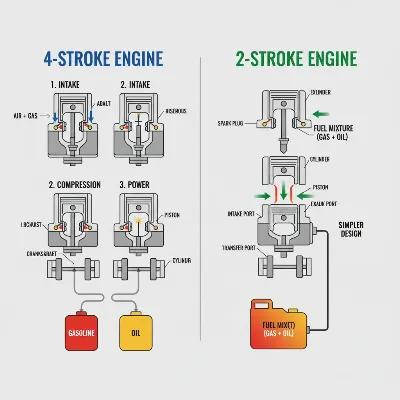 An illustrative comparison of a 4-stroke engine and a 2-stroke engine, highlighting their internal components and fuel systems.
Top 4-Stroke Gas String Trimmers: A Comparative Look
When it comes to selecting a top-tier 4-stroke gas string trimmer, certain models consistently rise above the rest, offering a blend of power, reliability, and user-friendly features. The table below provides a quick comparison of some leading options, highlighting their core attributes to help you begin your search.
| Product Name | Engine | Cutting Swath | Key Advantages | Considerations |
|---|---|---|---|---|
| Husqvarna 324L | 25cc Honda 4-stroke | 18 inches | Lightweight, SmartStart, Tap ‘N Go head, powerful | Premium price, requires oil changes, heavier than 2-stroke |
| Craftsman CMXGTAMD30SA | 30cc 4-stroke | 17 inches | Most powerful, easy starting, easy-winding bump head | Heavier, higher fuel consumption, requires oil changes |
| Honda HHT25SLTA | 25cc Honda 4-stroke | 17 inches | Exceptional reliability, quiet, fuel-efficient, low emissions | Premium price, can be heavier, requires oil changes |
In-Depth Reviews of Leading 4-Stroke String Trimmers
Understanding the specifications is one thing, but a deeper dive into what makes each model stand out can solidify your decision. Here are detailed evaluations of some of the best 4-stroke gas string trimmers available in 2026.
Husqvarna 324L 4-Cycle Straight Shaft String Trimmer
The Husqvarna 324L is often lauded for its impressive blend of power and surprisingly lightweight design for a 4-stroke machine. It is powered by a high-quality Honda 4-stroke engine, ensuring reliable performance and the convenience of not mixing fuel. This model boasts an 18-inch cutting width, allowing for efficient coverage of larger areas. Features like Husqvarna’s “SmartStart” technology and the “Tap ‘N Go” line release system make operation straightforward and user-friendly. Its T25 trimmer head is also noted for being easy to restring, saving valuable time during yard work. While it comes at a premium price point, its exceptional performance and durability make it a worthwhile investment for serious homeowners and light commercial users.
Craftsman CMXGTAMD30SA 4-Cycle String Trimmer
For those needing substantial power to tackle particularly tough overgrowth, the Craftsman CMXGTAMD30SA is an excellent contender. Featuring a robust 30cc 4-cycle engine, this trimmer stands out as one of the most powerful options in its class, capable of handling dense grass and challenging brush with ease. Craftsman has prioritized ease of use with its two-step prime and pull starting system, simplifying ignition. The easy-winding bump head further adds to its operational convenience, allowing for quick line advancements without interruption. This model is particularly suited for properties with extensive areas of thick vegetation or commercial-grade jobs where raw power and consistent performance are paramount. Its power, however, does come with increased weight, which is a common trade-off for higher displacement 4-stroke engines.
Honda HHT25SLTA 4-Stroke String Trimmer
Honda is synonymous with reliable small engines, and the HHT25SLTA string trimmer lives up to that reputation. Equipped with a Honda GX25 mini 4-stroke engine, this trimmer offers exceptional reliability, quiet operation, and impressive fuel efficiency. Users appreciate the smooth performance and significantly reduced emissions, making it a more environmentally conscious choice. The elimination of fuel mixing is a major draw, providing hassle-free operation with straight unleaded gasoline. The HHT25SLTA is designed for comfort and ease of use, often featuring ergonomic handles and effective anti-vibration systems. While it also represents a premium investment, its legendary durability, low maintenance (apart from oil changes), and consistent performance ensure it remains a top choice for those prioritizing long-term value and operational quality.
Maintaining Your 4-Stroke String Trimmer for Longevity
Proper maintenance is key to ensuring your 4-stroke gas string trimmer remains reliable and efficient for years to come. Unlike 2-stroke models, 4-stroke engines have specific needs that, when addressed, will significantly extend their lifespan and performance.
Pre-Operation Checks
Before each use, dedicate a few moments to inspect your trimmer. Crucially, always check the engine oil level; 4-stroke engines require precise oil levels for optimal lubrication and cooling. Inspect the trimmer line for wear or damage, replacing it if necessary. Look for any loose nuts, bolts, or guards, tightening them as needed. Ensure the fuel tank contains fresh, straight unleaded gasoline, avoiding older or mixed fuels. These quick checks prevent potential issues during operation.
Effective Trimming Techniques
Using the correct technique not only makes trimming easier but also reduces strain on the machine and operator. Maintain a firm, balanced grip and a comfortable stance. Employ a sweeping motion, cutting grass with the tip of the line and away from your body. Avoid directly hitting hard surfaces like concrete or rocks, as this can prematurely wear down the line and potentially damage the trimmer head. Adjust your cutting height as needed, tackling taller grass in multiple passes rather than attempting to cut it all at once.
Post-Use Cleaning & Scheduled Maintenance
After each trimming session, thoroughly clean your string trimmer. Remove grass clippings, dirt, and debris from the cutting head, shaft, and especially the engine’s cooling fins. Accumulated debris can lead to overheating and reduced efficiency.
Regular oil changes are paramount for 4-stroke engines. It’s recommended to change the oil after the first 10 hours of use, and then approximately every 28 hours or at least annually, typically before the first use of the season. To change the oil, run the engine briefly to warm the oil, allowing it to drain more completely. Place the trimmer on a level surface, prop up the engine, remove the oil drain plug, and allow the old oil to drain into a suitable container. Refill with the manufacturer-recommended oil type to the correct level, being careful not to overfill.
The air filter also requires regular attention. Inspect it frequently, especially in dusty conditions. Foam filters can often be washed with detergent and water, then lightly re-oiled with SAE 30 oil once dry. Paper filters typically need replacement when dirty. Annually, or every two years, inspect and clean or replace the spark plug according to your owner’s manual specifications. The fuel filter should also be replaced every two to three years. For fuel storage, use a fuel stabilizer if you plan to store gasoline for extended periods, and always keep fuel in approved, sealed containers in a cool, shaded area.
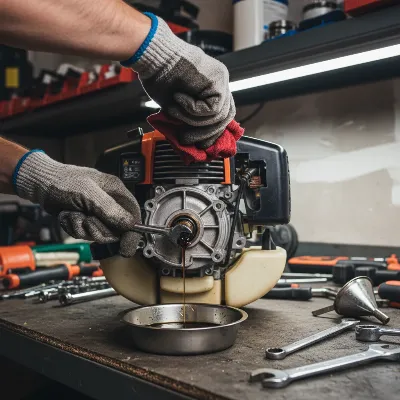 A close-up view of a person performing an oil change on a 4-stroke string trimmer engine, with tools and oil containers visible.
Where to Purchase Your Next 4-Stroke String Trimmer
Once you’ve identified the ideal 4-stroke gas string trimmer for your needs, the next step is finding a reputable place to buy it. You have several convenient options, each offering distinct advantages.
Online retailers such as Amazon, Lowe’s, and Home Depot offer a vast selection of models, often at competitive prices, with the convenience of home delivery. These platforms also provide access to numerous customer reviews, which can be invaluable for real-world insights into product performance. When purchasing online, always confirm the seller’s return policy and warranty information.
Alternatively, local outdoor power equipment dealerships or hardware stores offer the benefit of expert advice and personalized service. Sales associates can provide hands-on demonstrations, answer specific questions, and help you compare models in person. Local dealers often provide assembly services, initial maintenance tips, and convenient access to parts and repair services down the line. This can be particularly beneficial for ensuring proper setup and long-term support for your investment. Consider visiting both online and brick-and-mortar stores to compare prices, product availability, and the level of customer service.
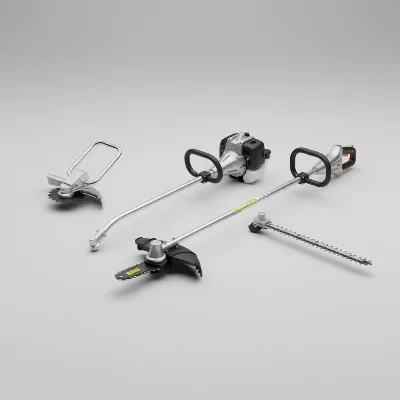 A collection of various attachments compatible with a multi-tool capable string trimmer, such as an edger, pole saw, and hedge trimmer.
Conclusion
Choosing the best 4-stroke gas string trimmer in 2026 can transform your yard maintenance routine, offering a powerful, reliable, and more comfortable way to keep your property looking pristine. By understanding the distinct advantages of 4-stroke engines—primarily no fuel mixing, quieter operation, and smoother performance—you can confidently select a tool that meets your demands. Factors such as engine power, cutting swath, ergonomic design, and attachment compatibility are crucial considerations that will guide you to the perfect match.
Investing in a quality 4-stroke trimmer like the Husqvarna 324L, Craftsman CMXGTAMD30SA, or a reliable Honda model, coupled with diligent maintenance, ensures years of exceptional performance. These machines are built to tackle everything from routine trimming to heavier brush, providing the power and precision needed for a truly immaculate lawn. Remember, a well-chosen tool not only simplifies tasks but also enhances the enjoyment of creating a beautiful outdoor space. Which 4-stroke gas string trimmer will be the powerhouse behind your perfect lawn this year?
Frequently Asked Questions
What is the main advantage of a 4-stroke string trimmer over a 2-stroke?
The primary advantage is that 4-stroke trimmers run on straight unleaded gasoline, eliminating the need to mix oil and gas. They also tend to be quieter, run smoother with less vibration, and produce fewer emissions, enhancing user comfort and environmental friendliness.
Do 4-stroke string trimmers require special fuel?
No, 4-stroke string trimmers use regular, straight unleaded gasoline, similar to what you’d put in your car. This convenience means you don’t have to worry about mixing specific fuel-oil ratios, simplifying the fueling process significantly.
How often should I change the oil in my 4-stroke string trimmer?
It is generally recommended to change the oil after the first 10 hours of use. Subsequently, plan to change the oil every 28 hours of operation or at least once a year, typically before the start of the trimming season, to ensure optimal engine health and longevity.
Are 4-stroke trimmers heavier than 2-stroke trimmers?
Yes, 4-stroke trimmers are typically heavier than their 2-stroke counterparts. This is due to the more complex internal components and separate lubrication system of the 4-stroke engine, which adds to the overall weight of the tool.
Can I use attachments with a 4-stroke gas string trimmer?
Many 4-stroke gas string trimmers are designed to be attachment-capable. This allows you to expand their functionality by adding various accessories like edgers, hedge trimmers, pole saws, or brush cutters, transforming your single tool into a versatile multi-tool for various yard tasks.
Get our weekly buyer guide
Practical specs, not advice. Unsubscribe anytime.
