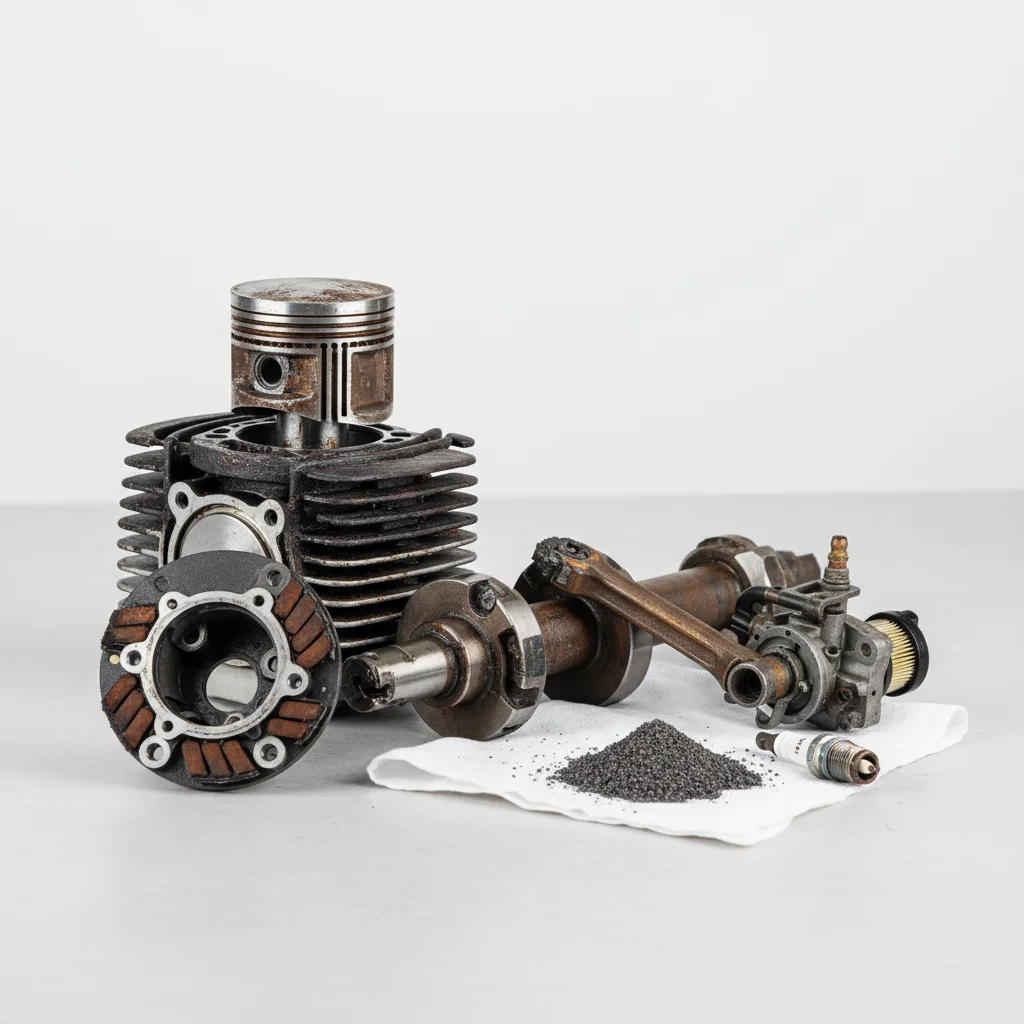
A string trimmer engine seizing can be a frustrating and costly problem, often indicating a serious internal issue. Typically, engine seizure occurs when moving parts within the engine, such as the piston and cylinder, bind together due to extreme friction or lack of lubrication. This can lead to a complete halt of the engine and prevent it from starting. Understanding the root causes is crucial for both prevention and repair.
Lack of Lubrication
One of the most frequent culprits behind a seized string trimmer engine is insufficient lubrication. Two-stroke engines, common in many string trimmers, rely on a precise fuel-to-oil mixture to lubricate internal components. If the oil ratio is too low, or if the wrong type of oil is used, critical parts like the piston, connecting rod, and crankshaft will experience excessive friction. This friction generates immense heat, causing metal components to expand and eventually weld together, leading to seizure. Always ensure you are using the manufacturer-recommended two-stroke oil and mixing it accurately according to the specifications, typically found in your owner’s manual.
Overheating
Overheating can also cause an engine to seize, even with proper lubrication. This can happen if the engine is run for extended periods in hot weather, if the cooling fins are clogged with debris, or if the air filter is severely restricted, leading to a lean fuel mixture. When an engine overheats, the metal components expand beyond their normal operating tolerances, reducing clearances and increasing friction. Eventually, this can lead to the piston binding in the cylinder. Regularly clean the cooling fins and air filter to ensure adequate airflow and prevent overheating.
Contaminated Fuel or Water Ingress
|
Our Picks for the Best String Trimmer in 2026
As an Amazon Associate I earn from qualifying purchases.
|
||
| Num | Product | Action |
|---|---|---|
| 1 | BLACK+DECKER Weed Wacker with Auto Feed, 14-Inch 2 in 1 String Trimmer Lawn Edger, Powerful 6.5-Amp Lightweight Electric Weed Eater (BESTA510) |

|
| 2 | CRAFTSMAN WEEDWACKER® String Trimmer, 6.5 Amp, 14-Inch (CMEST913) |
|
| 3 | Houselife 12" Cordless Weed Eater Compatible with Dewalt 20V Max Battery (No Battery), Auto Feed Cordless String Trimmer&Weed Wacker, Lightweight Electric 20V Weed Trimmer&Edger for Lawn, Garden, Yard |
|
| 4 | BLACK+DECKER 20V MAX Weed Eater, Edger and Sweeper Combo, Includes 2 Batteries and Charger, Cordless Electric Weed Wacker and 130 Mph Hard Surface Leaf Blower, 10 in. (LCC222) |
|
| 5 | Cordless String Trimmer Compatible with Dewalt 20V MAX Battery, 12-Inch Weed Wacker Cordless Auto Line Feed,Electric Weed Eater Battery Powered Grass Trimmer w/6 Line Spools(Tool Only) |
|
| 6 | WORX Cordless String Trimmer & Lawn Edger, 12'' Electric Weed Wacker with 5.5 LBS, 20V Weed Eater with 90° Pivoting Head, Battery & Charger Included, WG170.2 |
|
| 7 | Cordless String Trimmer Compatible with Milwaukee M18 18V Battery(Tool Only), 12-Inch 3-in-1 Weed Eater with 8500RPM Upgraded Motor, Automatic Line Feed Weed Wacker for Lawn Edging and Mowing-Red |
|
| 8 | 20V 12" Cordless String Trimmer With 2 X 4.0Ah Battery and Charger, Electric Grass Trimmer Battery Powered Eater String, Edger Lawn Tool Grass Cutter With 8pcs Line, Lawn Mover For Garden Yard, Orange |
|
| 9 | WORX Cordless String Trimmer & Lawn Edger, 12'' Electric Weed Wacker with 4.6 LBS, 20V Weed Eater with 90° Pivoting Head, Batteries & Charger Not Included, WG170.9 |
|
| 10 | BLACK+DECKER String Trimmer, Electric, 14-inch (BESTE620) |
|
Using contaminated fuel or allowing water to enter the fuel system can severely damage an engine and lead to seizure. Water in the fuel can displace lubrication, causing metal-on-metal contact, especially in the carburetor and cylinder. Dirt, debris, or old, stale fuel can also cause issues by clogging fuel lines and the carburetor, leading to a lean condition and overheating. Always use fresh, clean fuel and store your string trimmer in a dry place to prevent moisture ingress. Consider using a fuel stabilizer if you store fuel for extended periods.
Worn or Damaged Internal Components
Over time, internal engine components like the piston rings, cylinder walls, or crankshaft bearings can wear out or become damaged. Worn piston rings can lead to a loss of compression and allow combustion gases to bypass the piston, causing excessive heat and reducing lubrication effectiveness. Damaged bearings can create excessive play and friction, leading to catastrophic failure. While these issues are often a result of prolonged use, they can be accelerated by poor maintenance or operating the trimmer under heavy loads. Regular servicing can help identify and address these issues before they lead to a full seizure.
Improper Storage
Improper storage, especially during off-season, can contribute to engine seizure. If a string trimmer is stored with fuel in the tank for long periods, the fuel can degrade and leave gummy deposits that clog the carburetor and fuel lines. Additionally, moisture can accumulate inside the engine, leading to rust on internal components. Rust can cause parts to bind and seize when the engine is next started. Always drain the fuel system and consider fogging the engine with a storage oil before long-term storage to protect internal parts.
- Always use the correct fuel-to-oil mixture for 2-stroke engines.
- Regularly clean cooling fins and air filters to prevent overheating.
- Use fresh, clean fuel and store the trimmer in a dry environment.
- Perform routine maintenance to check for worn internal parts.
- Properly prepare your string trimmer for long-term storage.
Addressing these common causes can significantly extend the life of your string trimmer and prevent the costly headache of engine seizure. If your engine has already seized, it often requires professional repair or replacement, as the damage can be extensive. For minor issues, you might find replacement parts at. For more severe cases, a new unit might be more economical, and you can explore options like.
Get our weekly buyer guide
Practical specs, not advice. Unsubscribe anytime.
