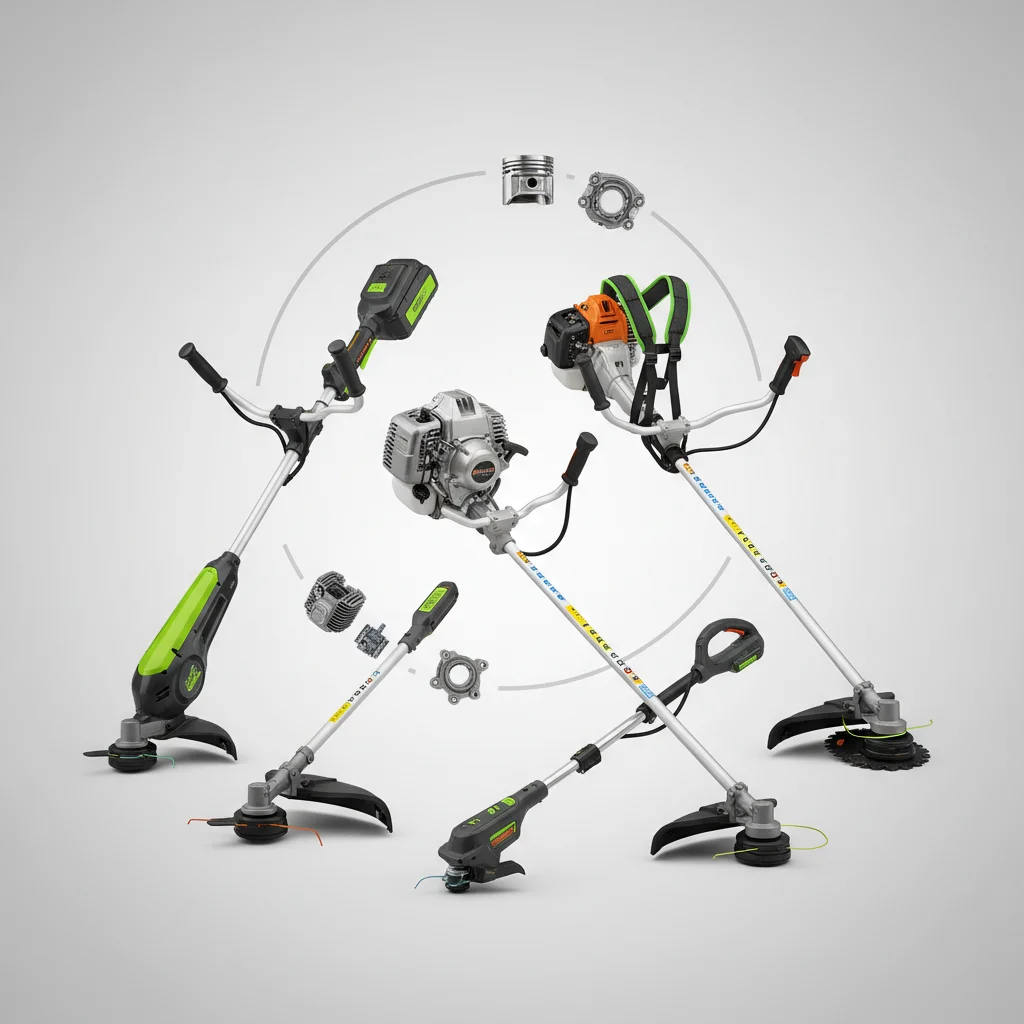
Understanding string trimmer horsepower is crucial for selecting the right tool for your yard. For most residential tasks, a string trimmer with 1 to 2 horsepower (HP) is sufficient, while commercial applications often demand 2.5 HP or more. This power rating directly impacts the trimmer’s ability to cut through various types of vegetation, from light grass to dense weeds and brush.
Understanding Horsepower in String Trimmers
Horsepower in string trimmers, whether gas or electric, indicates the engine’s or motor’s output power. For gas models, it’s a direct measure of the internal combustion engine’s strength. Electric trimmers, while not always explicitly rated in HP, have equivalent power ratings often expressed in volts (V) for battery models or amps (A) for corded ones. A higher HP or equivalent rating generally means more torque and faster line speed, allowing for more aggressive cutting and tackling thicker growth without bogging down. For gas buying guides on this site.
It’s important to note that manufacturers sometimes use different metrics, such as cubic centimeters (cc) for gas engines, which correlates to horsepower. Generally, a 25cc engine is roughly equivalent to 1 HP, though this can vary slightly between brands and engine designs. Always consider the overall design and intended use of the trimmer, not just a single specification.
Horsepower for Residential Use
For typical home landscaping, including trimming around fences, garden beds, and light weed control, a string trimmer in the 1 to 2 HP range is usually ideal. This power level provides enough force to cut through common lawn grasses and small weeds efficiently without being overly heavy or difficult to maneuver. Many electric models, both corded and cordless, fall into this performance category, offering convenience and lower noise levels.
If your yard includes areas with slightly tougher weeds or you prefer a quicker trimming experience, opting for the higher end of this range, around 1.5 to 2 HP, will offer a noticeable improvement in performance. These trimmers strike a good balance between power, weight, and cost, making them a popular choice for homeowners.
- Light grass and small weeds: 1-1.5 HP
- Medium weeds and thicker grass: 1.5-2 HP
- Occasional brush clearing: 2+ HP
- Large properties with varied vegetation: 2.5+ HP
Horsepower for Commercial and Heavy-Duty Use
|
Our Picks for the Best String Trimmer in 2026
As an Amazon Associate I earn from qualifying purchases.
|
||
| Num | Product | Action |
|---|---|---|
| 1 | 20V 12" Cordless String Trimmer With 2 X 4.0Ah Battery and Charger, Electric Grass Trimmer Battery Powered Eater String, Edger Lawn Tool Grass Cutter With 8pcs Line, Lawn Mover For Garden Yard, Orange |

|
| 2 | WORX Cordless String Trimmer & Lawn Edger, 12'' Electric Weed Wacker with 4.6 LBS, 20V Weed Eater with 90° Pivoting Head, Batteries & Charger Not Included, WG170.9 |
|
| 3 | Cordless String Trimmer Compatible with Milwaukee M18 18V Battery(Tool Only), 12-Inch 3-in-1 Weed Eater with 8500RPM Upgraded Motor, Automatic Line Feed Weed Wacker for Lawn Edging and Mowing-Red |
|
| 4 | BLACK+DECKER Weed Wacker with Auto Feed, 14-Inch 2 in 1 String Trimmer Lawn Edger, Powerful 6.5-Amp Lightweight Electric Weed Eater (BESTA510) |
|
| 5 | Cordless String Trimmer Compatible with Dewalt 20V MAX Battery, 12-Inch Weed Wacker Cordless Auto Line Feed,Electric Weed Eater Battery Powered Grass Trimmer w/6 Line Spools(Tool Only) |
|
| 6 | WORX Cordless String Trimmer & Lawn Edger, 12'' Electric Weed Wacker with 5.5 LBS, 20V Weed Eater with 90° Pivoting Head, Battery & Charger Included, WG170.2 |
|
| 7 | CRAFTSMAN WEEDWACKER® String Trimmer, 6.5 Amp, 14-Inch (CMEST913) |
|
| 8 | BLACK+DECKER 20V MAX Weed Eater, Edger and Sweeper Combo, Includes 2 Batteries and Charger, Cordless Electric Weed Wacker and 130 Mph Hard Surface Leaf Blower, 10 in. (LCC222) |
|
| 9 | Houselife 12" Cordless Weed Eater Compatible with Dewalt 20V Max Battery (No Battery), Auto Feed Cordless String Trimmer&Weed Wacker, Lightweight Electric 20V Weed Trimmer&Edger for Lawn, Garden, Yard |
|
| 10 | BLACK+DECKER String Trimmer, Electric, 14-inch (BESTE620) |
|
Commercial landscapers and homeowners with extensive properties or challenging vegetation will benefit from string trimmers with 2.5 HP or more. These high-powered machines are designed to handle dense brush, thick weeds, and prolonged use without overheating or losing efficiency. They often feature larger engines (30cc and above for gas models) and robust construction to withstand the rigors of professional work.
When selecting a commercial-grade trimmer, also consider features like anti-vibration systems, comfortable harnesses, and durable cutting heads, as these contribute significantly to user comfort and overall productivity during long hours of operation. The increased power allows for faster job completion and less strain on the equipment when facing demanding tasks.
Gas vs. Electric: Horsepower Equivalents
While gas trimmers are traditionally rated in horsepower, electric trimmers use different metrics. Corded electric trimmers are often rated by amperage (A), with higher amps indicating more power. A 10-amp corded trimmer can offer performance comparable to a 1.5 HP gas model, suitable for most residential tasks. Cordless battery-powered trimmers are rated by voltage (V) and amp-hours (Ah). Higher voltage (e.g., 40V, 60V, 80V) generally means more power, while higher amp-hours indicate longer runtimes.
For example, a 40V cordless trimmer might be equivalent to a 1-1.5 HP gas trimmer, while an 80V model can rival a 2-2.5 HP gas unit in terms of cutting power. The choice between gas and electric often comes down to personal preference regarding noise, maintenance, and the convenience of fuel versus battery charging. However, modern electric trimmers are increasingly closing the power gap with their gas counterparts, especially for residential and light commercial applications.
Factors Beyond Horsepower
While horsepower is a key indicator of a string trimmer’s cutting capability, it’s not the only factor to consider. The design of the cutting head, the diameter and type of trimmer line used, and the overall balance and ergonomics of the tool also play significant roles in its effectiveness and user experience. A well-designed trimmer with slightly less horsepower might outperform a higher-HP model if it has superior line feed, a more efficient cutting head, or better weight distribution.
Additionally, features like shaft type (straight vs. curved), attachment compatibility, and ease of starting can greatly influence your satisfaction with a string trimmer. Always consider your specific needs, the type of vegetation you’ll be tackling, and your physical comfort when making a purchasing decision.
Get our weekly buyer guide
Practical specs, not advice. Unsubscribe anytime.
