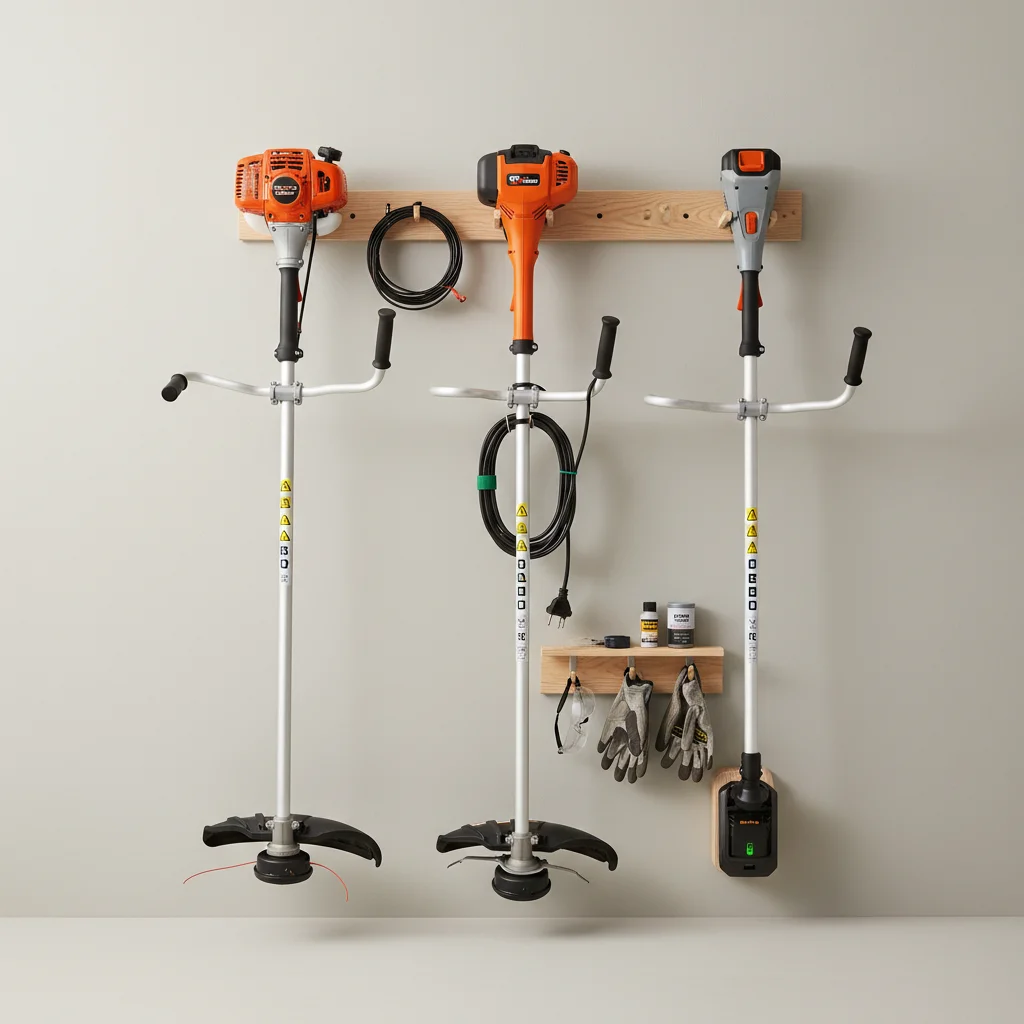
Proper string trimmer storage is crucial for extending the life of your equipment and ensuring it’s ready for action when you need it. Whether you have a gas or electric model, following a few key steps can prevent common issues like fuel system clogs, battery degradation, and rust. There are five essential steps to correctly store your string trimmer for optimal longevity.
Clean Your String Trimmer Thoroughly
Before storing your string trimmer, a thorough cleaning is paramount. Remove any grass clippings, dirt, and debris from the cutting head, shaft, and engine housing. Use a stiff brush or compressed air for hard-to-reach areas. For gas models, pay close attention to the cooling fins to ensure proper airflow during future operation. A clean machine not only looks better but also prevents corrosion and buildup that can hinder performance over time.
Prepare the Fuel System for Gas Trimmers
For gas string trimmers, preparing the fuel system is perhaps the most critical step for long-term storage. You have two main options: either run the fuel tank dry or use a fuel stabilizer. Running the tank dry involves operating the trimmer until it runs out of fuel, ensuring no stale gasoline is left to gum up the carburetor. Alternatively, add a high-quality fuel stabilizer to a full tank of fresh fuel, run the engine for a few minutes to circulate it, and then store. This prevents ethanol-related damage and keeps fuel fresh for up to 12 months.
Battery Care for Electric and Cordless Models
|
Our Picks for the Best String Trimmer in 2026
As an Amazon Associate I earn from qualifying purchases.
|
||
| Num | Product | Action |
|---|---|---|
| 1 | Cordless String Trimmer Compatible with Dewalt 20V MAX Battery, 12-Inch Weed Wacker Cordless Auto Line Feed,Electric Weed Eater Battery Powered Grass Trimmer w/6 Line Spools(Tool Only) |

|
| 2 | WORX Cordless String Trimmer & Lawn Edger, 12'' Electric Weed Wacker with 5.5 LBS, 20V Weed Eater with 90° Pivoting Head, Battery & Charger Included, WG170.2 |
|
| 3 | BLACK+DECKER 20V MAX Weed Eater, Edger and Sweeper Combo, Includes 2 Batteries and Charger, Cordless Electric Weed Wacker and 130 Mph Hard Surface Leaf Blower, 10 in. (LCC222) |
|
| 4 | BLACK+DECKER Weed Wacker with Auto Feed, 14-Inch 2 in 1 String Trimmer Lawn Edger, Powerful 6.5-Amp Lightweight Electric Weed Eater (BESTA510) |
|
| 5 | WORX Cordless String Trimmer & Lawn Edger, 12'' Electric Weed Wacker with 4.6 LBS, 20V Weed Eater with 90° Pivoting Head, Batteries & Charger Not Included, WG170.9 |
|
| 6 | 20V 12" Cordless String Trimmer With 2 X 4.0Ah Battery and Charger, Electric Grass Trimmer Battery Powered Eater String, Edger Lawn Tool Grass Cutter With 8pcs Line, Lawn Mover For Garden Yard, Orange |
|
| 7 | CRAFTSMAN WEEDWACKER® String Trimmer, 6.5 Amp, 14-Inch (CMEST913) |
|
| 8 | Houselife 12" Cordless Weed Eater Compatible with Dewalt 20V Max Battery (No Battery), Auto Feed Cordless String Trimmer&Weed Wacker, Lightweight Electric 20V Weed Trimmer&Edger for Lawn, Garden, Yard |
|
| 9 | Cordless String Trimmer Compatible with Milwaukee M18 18V Battery(Tool Only), 12-Inch 3-in-1 Weed Eater with 8500RPM Upgraded Motor, Automatic Line Feed Weed Wacker for Lawn Edging and Mowing-Red |
|
| 10 | BLACK+DECKER String Trimmer, Electric, 14-inch (BESTE620) |
|
Electric and cordless string trimmers require different storage considerations, primarily focusing on battery health. For cordless models, remove the battery from the trimmer. Store lithium-ion batteries in a cool, dry place, ideally at a charge level between 40% and 60%. Avoid storing fully charged or completely depleted batteries, as this can reduce their overall lifespan. For corded electric models, simply clean the unit and coil the power cord neatly before storage.
Lubricate Moving Parts and Inspect for Wear
Before putting your string trimmer away, take a moment to lubricate any moving parts. For gas models, this often includes the gearbox and any pivot points. Consult your owner’s manual for specific lubrication points and recommended lubricants. This step helps prevent rust and ensures smooth operation when you retrieve the trimmer. While lubricating, inspect the trimmer head, line, and any other components for signs of wear or damage. Replacing worn parts now can save you time and frustration later.
- Clean the air filter or replace if necessary.
- Check spark plug condition on gas models; replace if fouled.
- Inspect the cutting head for cracks or damage.
- Ensure all screws and bolts are tight.
- Examine the starter cord for fraying.
Choose the Right Storage Location
The final step is selecting an appropriate storage location. Store your string trimmer in a dry, protected area, such as a garage, shed, or utility closet. Avoid areas with extreme temperature fluctuations or high humidity, which can lead to rust and material degradation. For gas models, ensure the area is well-ventilated if there’s any residual fuel vapor. Hanging the trimmer on a wall mount can save space and keep it off the floor, preventing accidental damage.
Get our weekly buyer guide
Practical specs, not advice. Unsubscribe anytime.
