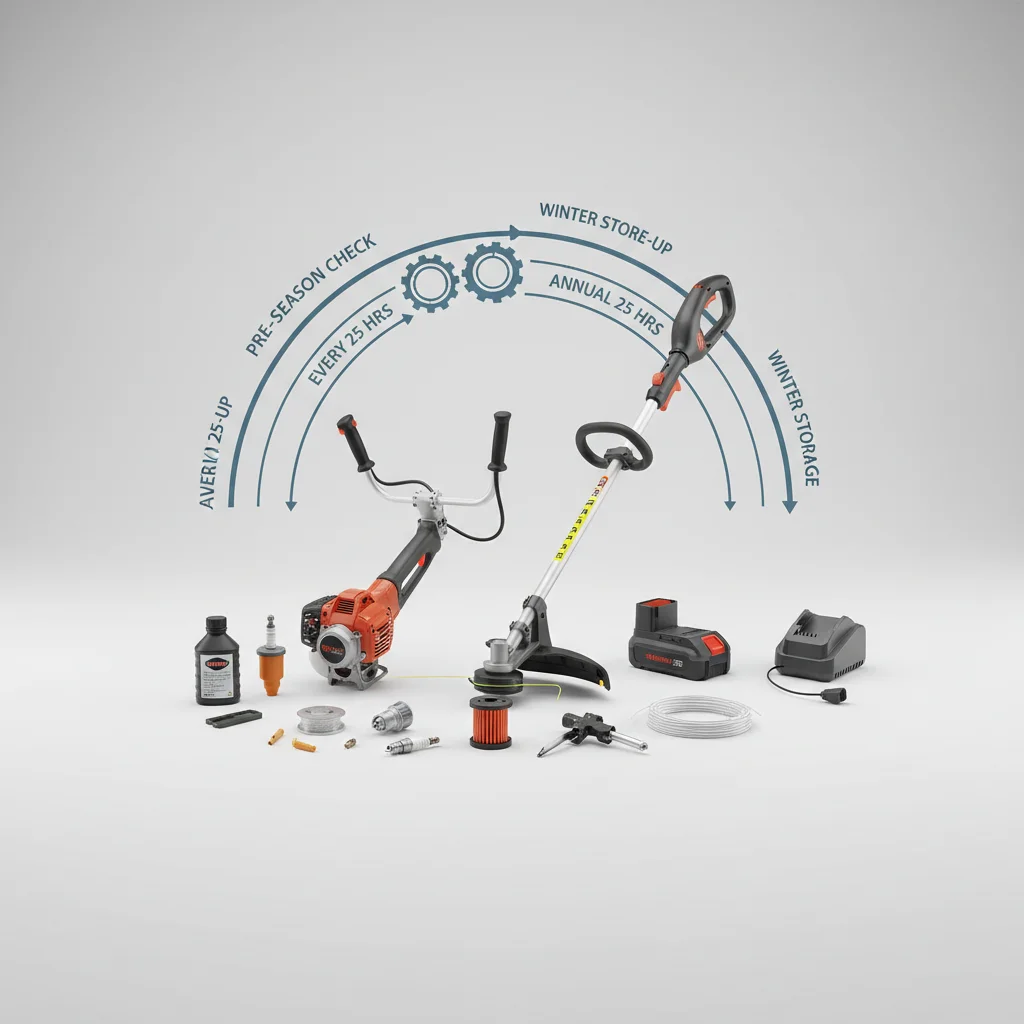
A consistent string trimmer maintenance schedule is crucial for extending the life of your tool and ensuring optimal performance. For most home users, a basic service should be performed at least once per season, with more detailed checks every 25 hours of operation or annually, whichever comes first. Commercial users, or those with heavy usage, should consider more frequent inspections and servicing, potentially every 10-15 hours of use.
Why a Maintenance Schedule Matters
Regular maintenance prevents common issues like engine stalling, poor cutting performance, and premature wear of components. Neglecting your string trimmer can lead to costly repairs and a significantly shorter lifespan for the tool. A well-maintained trimmer also operates more efficiently, saving you time and effort in the long run. For expert gas reviews on this site.
Seasonal Maintenance Checklist
Before the start of each trimming season, perform a thorough check of your string trimmer. This includes inspecting the air filter, spark plug, and fuel filter. Clean or replace these components as needed. Lubricate the gearbox and check all fasteners for tightness. Ensure the cutting head is free of debris and that the line feeds properly. This proactive approach will help you avoid frustrating breakdowns during peak usage.
- Inspect and clean or replace the air filter.
- Check and clean or replace the spark plug.
- Examine and replace the fuel filter if necessary.
- Lubricate the gearbox with appropriate grease.
- Tighten all screws, bolts, and nuts.
Post-Use and Monthly Checks
|
Our Picks for the Best String Trimmer in 2026
As an Amazon Associate I earn from qualifying purchases.
|
||
| Num | Product | Action |
|---|---|---|
| 1 | 20V 12" Cordless String Trimmer With 2 X 4.0Ah Battery and Charger, Electric Grass Trimmer Battery Powered Eater String, Edger Lawn Tool Grass Cutter With 8pcs Line, Lawn Mover For Garden Yard, Orange |

|
| 2 | Houselife 12" Cordless Weed Eater Compatible with Dewalt 20V Max Battery (No Battery), Auto Feed Cordless String Trimmer&Weed Wacker, Lightweight Electric 20V Weed Trimmer&Edger for Lawn, Garden, Yard |
|
| 3 | BLACK+DECKER 20V MAX Weed Eater, Edger and Sweeper Combo, Includes 2 Batteries and Charger, Cordless Electric Weed Wacker and 130 Mph Hard Surface Leaf Blower, 10 in. (LCC222) |
|
| 4 | BLACK+DECKER String Trimmer, Electric, 14-inch (BESTE620) |
|
| 5 | Cordless String Trimmer Compatible with Milwaukee M18 18V Battery(Tool Only), 12-Inch 3-in-1 Weed Eater with 8500RPM Upgraded Motor, Automatic Line Feed Weed Wacker for Lawn Edging and Mowing-Red |
|
| 6 | BLACK+DECKER Weed Wacker with Auto Feed, 14-Inch 2 in 1 String Trimmer Lawn Edger, Powerful 6.5-Amp Lightweight Electric Weed Eater (BESTA510) |
|
| 7 | WORX Cordless String Trimmer & Lawn Edger, 12'' Electric Weed Wacker with 5.5 LBS, 20V Weed Eater with 90° Pivoting Head, Battery & Charger Included, WG170.2 |
|
| 8 | Cordless String Trimmer Compatible with Dewalt 20V MAX Battery, 12-Inch Weed Wacker Cordless Auto Line Feed,Electric Weed Eater Battery Powered Grass Trimmer w/6 Line Spools(Tool Only) |
|
| 9 | CRAFTSMAN WEEDWACKER® String Trimmer, 6.5 Amp, 14-Inch (CMEST913) |
|
| 10 | WORX Cordless String Trimmer & Lawn Edger, 12'' Electric Weed Wacker with 4.6 LBS, 20V Weed Eater with 90° Pivoting Head, Batteries & Charger Not Included, WG170.9 |
|
After each use, especially if you’ve been trimming in dusty or dirty conditions, take a few minutes to clean the exterior of your string trimmer. Remove any grass clippings, dirt, or debris from the engine housing and cutting head. Monthly, or after approximately 10 hours of use, check the condition of the string trimmer line and replace it if it’s worn or brittle. Also, inspect the cutting head for any cracks or damage.
Annual Deep Dive and Storage Preparation
At the end of the trimming season, before storing your string trimmer for the winter, perform a more comprehensive service. This includes draining the fuel (for gas models) or running the engine until it’s out of fuel, cleaning the carburetor, and inspecting the starter rope and housing. For electric models, ensure the battery is charged to a storage level (typically 50-60%) and store it in a cool, dry place. Proper winterization prevents issues like fuel degradation and battery damage, ensuring your trimmer is ready to go next spring.
Common Maintenance Mistakes to Avoid
Many users make the mistake of using old or stale fuel, which can clog carburetors and damage engine components. Always use fresh fuel mixed with the correct oil ratio for 2-stroke engines. Another common error is neglecting to clean the air filter, leading to reduced engine performance and increased wear. Over-tightening fasteners can also cause damage, so always follow manufacturer specifications for torque settings. Adhering to a consistent maintenance schedule will help you avoid these pitfalls and keep your string trimmer in top condition.
Get our weekly buyer guide
Practical specs, not advice. Unsubscribe anytime.
