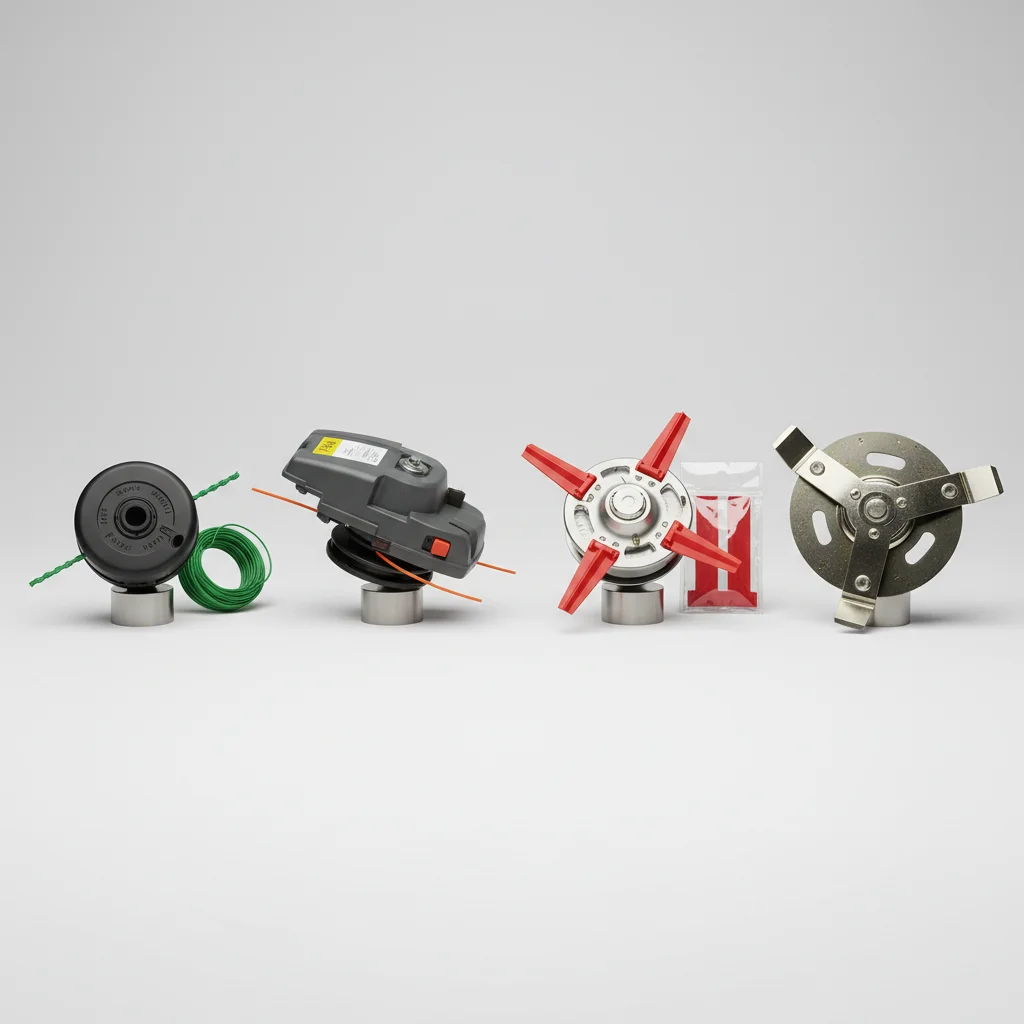
Choosing the right string trimmer head type is crucial for efficient and effective yard maintenance. There are primarily three main types of string trimmer heads: bump feed, fixed line, and automatic feed. Each design offers distinct advantages and disadvantages, catering to different user preferences and trimming needs. Understanding these differences will help you select the best head for your specific tasks, whether you’re tackling light grass or dense weeds.
Bump Feed String Trimmer Heads Explained
Bump feed heads are perhaps the most common type found on many string trimmers. They work by allowing the user to ‘bump’ the head against the ground while the trimmer is running, which releases more line. This mechanism is generally reliable and provides good control over line length. However, it can sometimes lead to line tangles or breakage if not used correctly. These heads are popular for their simplicity and ease of use, making them a good choice for general yard work.
Many users appreciate the ability to quickly extend the line without stopping the trimmer. This continuous operation can save time, especially when dealing with areas that require frequent line adjustments. While effective, the bumping action can wear down the head over time, necessitating occasional replacement.
Fixed Line String Trimmer Heads for Durability
Fixed line heads, also known as manual feed heads, require the user to manually insert and remove individual pieces of trimmer line. This design is known for its durability and ability to handle thicker, more aggressive cutting tasks. Since the line pieces are typically thicker and more robust, they are less prone to breaking, making fixed line heads ideal for clearing dense brush and tough weeds. The trade-off is the need to stop the trimmer and manually replace lines when they wear down, which can be time-consuming.
Despite the manual intervention, many professionals and homeowners with challenging landscapes prefer fixed line heads due to their superior cutting power and reduced line breakage. They are particularly effective in areas where obstacles might cause frequent line snapping with other head types. The robust nature of these heads also means they often last longer than their bump or automatic feed counterparts.
Automatic Feed String Trimmer Heads: Convenience at Your Fingertips
|
Our Picks for the Best String Trimmer in 2026
As an Amazon Associate I earn from qualifying purchases.
|
||
| Num | Product | Action |
|---|---|---|
| 1 | BLACK+DECKER Weed Wacker with Auto Feed, 14-Inch 2 in 1 String Trimmer Lawn Edger, Powerful 6.5-Amp Lightweight Electric Weed Eater (BESTA510) |

|
| 2 | CRAFTSMAN WEEDWACKER® String Trimmer, 6.5 Amp, 14-Inch (CMEST913) |
|
| 3 | Cordless String Trimmer Compatible with Dewalt 20V MAX Battery, 12-Inch Weed Wacker Cordless Auto Line Feed,Electric Weed Eater Battery Powered Grass Trimmer w/6 Line Spools(Tool Only) |
|
| 4 | Houselife 12" Cordless Weed Eater Compatible with Dewalt 20V Max Battery (No Battery), Auto Feed Cordless String Trimmer&Weed Wacker, Lightweight Electric 20V Weed Trimmer&Edger for Lawn, Garden, Yard |
|
| 5 | BLACK+DECKER String Trimmer, Electric, 14-inch (BESTE620) |
|
| 6 | Cordless String Trimmer Compatible with Milwaukee M18 18V Battery(Tool Only), 12-Inch 3-in-1 Weed Eater with 8500RPM Upgraded Motor, Automatic Line Feed Weed Wacker for Lawn Edging and Mowing-Red |
|
| 7 | 20V 12" Cordless String Trimmer With 2 X 4.0Ah Battery and Charger, Electric Grass Trimmer Battery Powered Eater String, Edger Lawn Tool Grass Cutter With 8pcs Line, Lawn Mover For Garden Yard, Orange |
|
| 8 | WORX Cordless String Trimmer & Lawn Edger, 12'' Electric Weed Wacker with 5.5 LBS, 20V Weed Eater with 90° Pivoting Head, Battery & Charger Included, WG170.2 |
|
| 9 | WORX Cordless String Trimmer & Lawn Edger, 12'' Electric Weed Wacker with 4.6 LBS, 20V Weed Eater with 90° Pivoting Head, Batteries & Charger Not Included, WG170.9 |
|
| 10 | BLACK+DECKER 20V MAX Weed Eater, Edger and Sweeper Combo, Includes 2 Batteries and Charger, Cordless Electric Weed Wacker and 130 Mph Hard Surface Leaf Blower, 10 in. (LCC222) |
|
Automatic feed heads, sometimes called auto-feed or auto-spool heads, automatically dispense new line as it wears down. This system uses a spring-loaded mechanism or centrifugal force to release more line without any user intervention. This offers the ultimate convenience, as you don’t need to stop or bump the trimmer to extend the line. However, this convenience can sometimes come at the cost of less control over line length, and the automatic mechanism can occasionally jam or feed too much line, leading to waste.
These heads are excellent for users who prioritize ease of use and uninterrupted trimming, especially for lighter tasks like trimming around flowerbeds or sidewalks. While they may not be as robust as fixed line heads for heavy-duty work, their hands-free operation makes them a popular choice for many homeowners.
Key Considerations When Choosing a Trimmer Head
When deciding between the different string trimmer head types, consider your specific needs and the type of work you’ll be doing. Here are some factors to keep in mind:
- Type of Vegetation: For light grass, automatic or bump feed heads are sufficient. For dense weeds and brush, fixed line heads are superior.
- Frequency of Use: If you trim frequently, an automatic feed head offers convenience. For occasional heavy-duty tasks, fixed line might be better.
- Ease of Line Replacement: Automatic feed is easiest, followed by bump feed. Fixed line requires manual insertion.
- Durability: Fixed line heads are generally the most durable, while automatic feed heads can be more prone to mechanical issues.
- Budget: The cost of replacement heads and line can vary significantly between types.
Ultimately, the best string trimmer head type for you depends on a balance of convenience, durability, and the specific demands of your yard work. Evaluating these factors will help you make an informed decision and ensure your trimmer is equipped for optimal performance.
Get our weekly buyer guide
Practical specs, not advice. Unsubscribe anytime.

After years of frustration with my old trimmer, I finally switched to a fixed line head, and what a difference! No more constantly stopping to feed line or dealing with tangles. It’s perfect for the dense weeds I have along my fence line. The durability is a huge plus, and I feel like I get a much cleaner cut now.
I tried an automatic feed head recently, hoping it would make things easier, but I found it went through line way too fast. It was convenient not having to bump or manually adjust, but I felt like I was constantly reloading the spool. Maybe it’s better for lighter grass, but for my thicker stuff, it just wasn’t efficient enough.
This was super helpful! I never really thought about the different string trimmer head types beyond just what came with my machine. I’ve been using a bump feed for years, but after reading about the advantages of fixed line for heavy-duty tasks, I’m definitely considering an upgrade for my commercial landscaping gigs. Efficiency is key for me.
I’ve always used bump feed heads, and this breakdown really helped me understand why. I like the control it gives me for releasing more line, especially when I’m working around flower beds. Sometimes it does tangle a bit if I’m not careful, but overall, it’s been reliable for my weekly yard work. Good to know there are other options out there too.