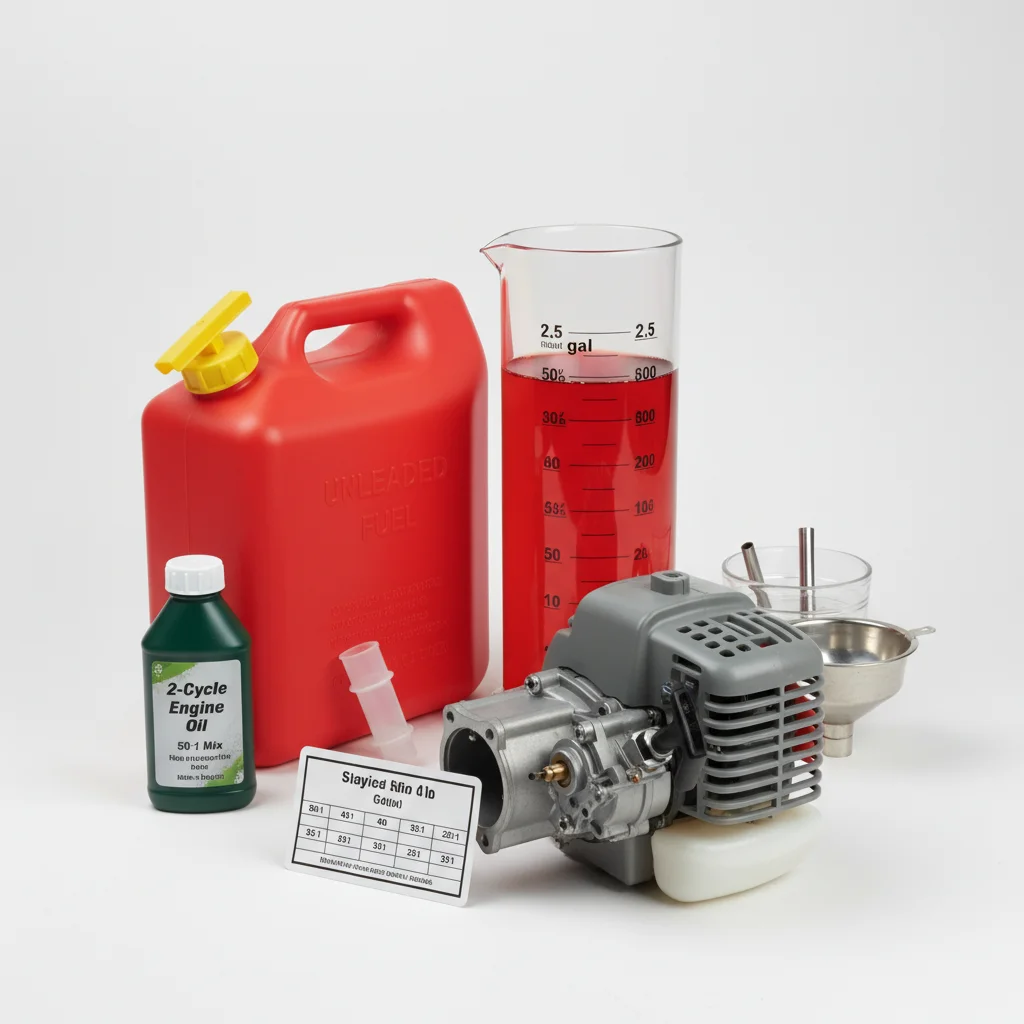
Understanding the correct string trimmer fuel mix is crucial for optimal engine performance and longevity. Most 2-stroke string trimmers require a fuel-to-oil ratio of either 50:1 or 40:1, depending on the manufacturer’s specifications. Using the wrong ratio can lead to engine damage, poor performance, and excessive smoke. Always consult your string trimmer’s owner’s manual to determine the precise ratio recommended for your specific model.
Why the Right Fuel Mix Matters
The fuel mix for a 2-stroke engine is a blend of gasoline and 2-cycle engine oil. The oil lubricates the engine’s internal components, as 2-stroke engines do not have a separate oil reservoir like 4-stroke engines. If the oil-to-fuel ratio is too low (not enough oil), the engine will not receive adequate lubrication, leading to premature wear and potential seizure. Conversely, if the ratio is too high (too much oil), it can cause excessive smoke, fouled spark plugs, carbon buildup, and reduced engine power. Adhering to the manufacturer’s recommended ratio ensures proper lubrication and combustion.
Common Fuel Mix Ratios Explained
The two most common fuel mix ratios for string trimmers are 50:1 and 40:1. A 50:1 ratio means 50 parts gasoline to 1 part 2-cycle oil. For example, if you’re mixing one gallon (128 ounces) of gasoline, you would add 2.56 ounces of 2-cycle oil. A 40:1 ratio means 40 parts gasoline to 1 part 2-cycle oil. For one gallon of gasoline, you would add 3.2 ounces of 2-cycle oil. Always use high-quality, fresh unleaded gasoline with an octane rating of 87 or higher, and a high-quality 2-cycle engine oil specifically designed for air-cooled engines.
- Check your string trimmer’s owner’s manual for the exact recommended ratio.
- Use fresh, unleaded gasoline (87 octane or higher).
- Always use a high-quality 2-cycle engine oil.
- Mix fuel in a clean, approved fuel container.
- Label your mixed fuel container with the date and ratio.
How to Properly Mix Your Fuel
|
Our Picks for the Best String Trimmer in 2026
As an Amazon Associate I earn from qualifying purchases.
|
||
| Num | Product | Action |
|---|---|---|
| 1 | CRAFTSMAN WEEDWACKER® String Trimmer, 6.5 Amp, 14-Inch (CMEST913) |

|
| 2 | WORX Cordless String Trimmer & Lawn Edger, 12'' Electric Weed Wacker with 4.6 LBS, 20V Weed Eater with 90° Pivoting Head, Batteries & Charger Not Included, WG170.9 |
|
| 3 | BLACK+DECKER Weed Wacker with Auto Feed, 14-Inch 2 in 1 String Trimmer Lawn Edger, Powerful 6.5-Amp Lightweight Electric Weed Eater (BESTA510) |
|
| 4 | Houselife 12" Cordless Weed Eater Compatible with Dewalt 20V Max Battery (No Battery), Auto Feed Cordless String Trimmer&Weed Wacker, Lightweight Electric 20V Weed Trimmer&Edger for Lawn, Garden, Yard |
|
| 5 | Cordless String Trimmer Compatible with Dewalt 20V MAX Battery, 12-Inch Weed Wacker Cordless Auto Line Feed,Electric Weed Eater Battery Powered Grass Trimmer w/6 Line Spools(Tool Only) |
|
| 6 | WORX Cordless String Trimmer & Lawn Edger, 12'' Electric Weed Wacker with 5.5 LBS, 20V Weed Eater with 90° Pivoting Head, Battery & Charger Included, WG170.2 |
|
| 7 | 20V 12" Cordless String Trimmer With 2 X 4.0Ah Battery and Charger, Electric Grass Trimmer Battery Powered Eater String, Edger Lawn Tool Grass Cutter With 8pcs Line, Lawn Mover For Garden Yard, Orange |
|
| 8 | Cordless String Trimmer Compatible with Milwaukee M18 18V Battery(Tool Only), 12-Inch 3-in-1 Weed Eater with 8500RPM Upgraded Motor, Automatic Line Feed Weed Wacker for Lawn Edging and Mowing-Red |
|
| 9 | BLACK+DECKER 20V MAX Weed Eater, Edger and Sweeper Combo, Includes 2 Batteries and Charger, Cordless Electric Weed Wacker and 130 Mph Hard Surface Leaf Blower, 10 in. (LCC222) |
|
| 10 | BLACK+DECKER String Trimmer, Electric, 14-inch (BESTE620) |
|
Mixing fuel for your string trimmer is a straightforward process, but it requires precision. Start by pouring the correct amount of 2-cycle oil into an approved fuel container. Then, add the appropriate amount of gasoline. It’s often recommended to add about half the gasoline, then the oil, and then the remaining gasoline. This helps ensure the oil is thoroughly mixed. Gently shake the container to ensure a complete blend. Never mix fuel directly in the string trimmer’s fuel tank. Always use a separate, clean container for mixing.
For accurate measurements, consider using a dedicated fuel mixing bottle or a measuring cup designed for small engine fuel. These tools often have markings for common ratios, simplifying the process and reducing the chance of error.
Storing Mixed Fuel Safely
Mixed fuel has a limited shelf life, typically around 30 days, especially if not stored properly. Over time, the oil can separate from the gasoline, and the gasoline itself can degrade, leading to starting issues and engine problems. Store mixed fuel in a cool, dry place away from direct sunlight and heat sources. Use an approved, airtight fuel container to prevent evaporation and contamination. It’s best to mix only the amount of fuel you anticipate using within a month. If you have older mixed fuel, it’s safer to dispose of it properly and mix a fresh batch.
Troubleshooting Fuel Mix Issues
If your string trimmer is experiencing issues like excessive smoke, poor performance, or difficulty starting, the fuel mix could be a culprit. Black or blue smoke often indicates too much oil in the mix, or that the engine is running too rich. White smoke can suggest water in the fuel or an engine running too lean. If the engine is seizing or overheating, it might be due to too little oil. Always re-check your fuel mix ratio and ensure you’re using fresh, properly mixed fuel before troubleshooting other potential problems. Regular maintenance, including spark plug checks and air filter cleaning, also plays a vital role in engine health.
Get our weekly buyer guide
Practical specs, not advice. Unsubscribe anytime.

My old electric trimmer just wasn’t cutting it for my large yard, so I switched to a gas model. I was a bit intimidated by the fuel mix, but understanding that the oil lubricates the engine’s internal components really helped it click for me. My new trimmer is a beast, and I’m confident I’m mixing its fuel correctly.
This was a good reminder about checking the owner’s manual. I have a Ryobi and thought it was 50:1, but it turns out mine actually needs a 40:1 mix. It’s a small detail, but it makes a big difference in how the trimmer performs, especially when I’m doing a lot of commercial landscaping.
I’ve always just eyeballed my fuel mix, but after reading about the importance of the 50:1 ratio for my Stihl, I decided to get serious. My trimmer runs so much smoother now, and I’ve noticed way less smoke. It’s definitely worth taking the time to get it right to avoid engine damage.
I appreciate the info on preventing engine seizure, but I wish there was more detail on specific oil brands. I’ve been using a generic 2-cycle oil, and while my trimmer runs, I’m always wondering if a premium oil would make a noticeable difference. Still, good points about the fuel-to-oil ratio.