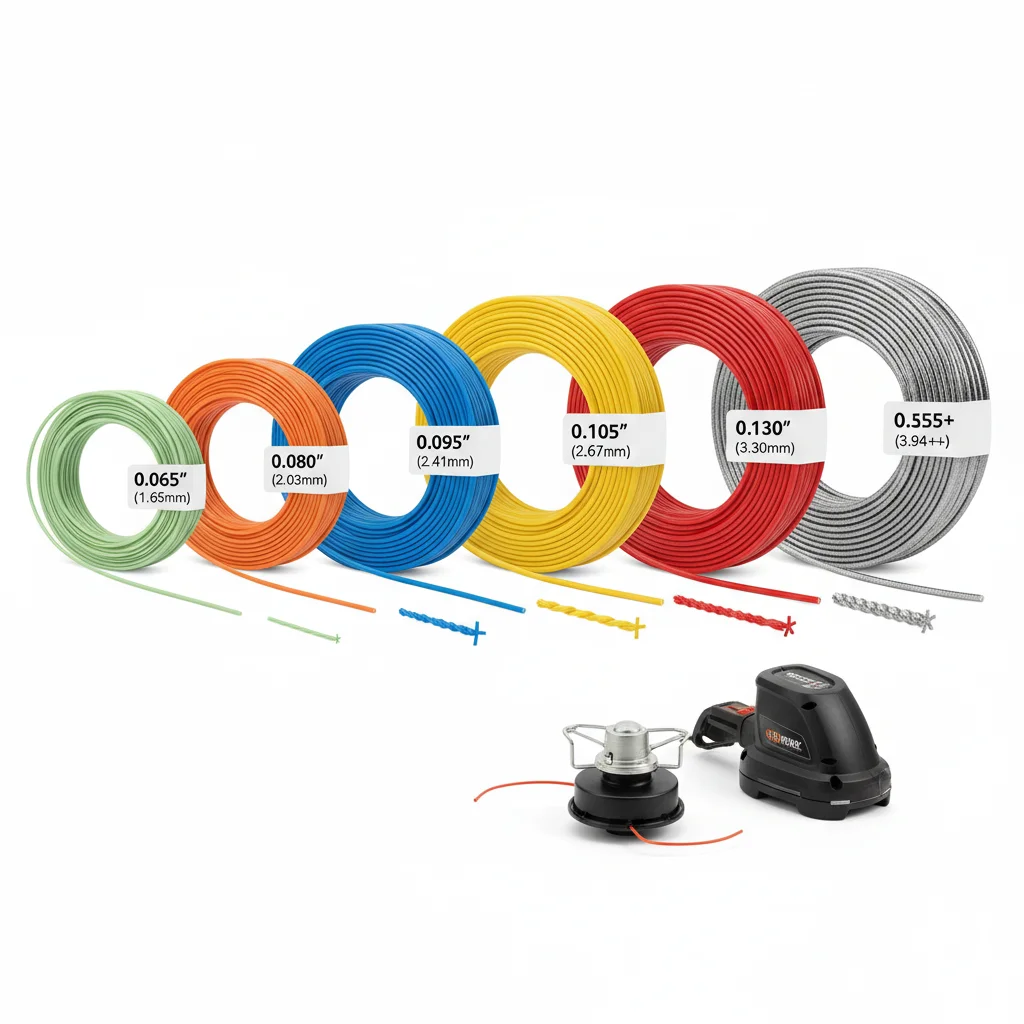
Choosing the correct string trimmer line size is crucial for efficient and effective yard work. The ideal diameter depends on your trimmer’s capabilities and the type of vegetation you’re cutting. Generally, there are three main categories: light-duty (0.065-0.080 inches), medium-duty (0.085-0.110 inches), and heavy-duty (0.110 inches and above). Selecting the right size prevents premature line breakage, reduces strain on your trimmer, and ensures a cleaner cut.
Understanding String Trimmer Line Diameters
String trimmer line diameters are measured in inches and directly correlate to the power of your trimmer and the toughness of the weeds you’re tackling. Smaller diameters, like 0.065 inches, are best suited for electric trimmers and light grass trimming. They are flexible and cut through delicate growth easily but break quickly on thicker weeds. Larger diameters, such as 0.130 inches, are designed for powerful gas trimmers and commercial use, capable of cutting through dense brush and woody weeds without constant breakage.
Matching Line Size to Your Trimmer Type
Your string trimmer’s manual will specify the recommended line diameter. Using a line that is too thick for your trimmer can overload the motor, leading to overheating and premature wear. Conversely, a line that is too thin will break frequently, requiring constant re-spooling and reducing productivity. Electric trimmers typically handle lines up to 0.080 inches, while most cordless battery trimmers can manage up to 0.095 inches. Gas-powered trimmers offer the most versatility, often accommodating lines from 0.095 inches up to 0.155 inches for heavy-duty applications.
Consider the Type of Vegetation
|
Our Picks for the Best String Trimmer in 2026
As an Amazon Associate I earn from qualifying purchases.
|
||
| Num | Product | Action |
|---|---|---|
| 1 | Cordless String Trimmer Compatible with Milwaukee M18 18V Battery(Tool Only), 12-Inch 3-in-1 Weed Eater with 8500RPM Upgraded Motor, Automatic Line Feed Weed Wacker for Lawn Edging and Mowing-Red |

|
| 2 | BLACK+DECKER String Trimmer, Electric, 14-inch (BESTE620) |
|
| 3 | CRAFTSMAN WEEDWACKER® String Trimmer, 6.5 Amp, 14-Inch (CMEST913) |
|
| 4 | WORX Cordless String Trimmer & Lawn Edger, 12'' Electric Weed Wacker with 4.6 LBS, 20V Weed Eater with 90° Pivoting Head, Batteries & Charger Not Included, WG170.9 |
|
| 5 | BLACK+DECKER Weed Wacker with Auto Feed, 14-Inch 2 in 1 String Trimmer Lawn Edger, Powerful 6.5-Amp Lightweight Electric Weed Eater (BESTA510) |
|
| 6 | BLACK+DECKER 20V MAX Weed Eater, Edger and Sweeper Combo, Includes 2 Batteries and Charger, Cordless Electric Weed Wacker and 130 Mph Hard Surface Leaf Blower, 10 in. (LCC222) |
|
| 7 | 20V 12" Cordless String Trimmer With 2 X 4.0Ah Battery and Charger, Electric Grass Trimmer Battery Powered Eater String, Edger Lawn Tool Grass Cutter With 8pcs Line, Lawn Mover For Garden Yard, Orange |
|
| 8 | Cordless String Trimmer Compatible with Dewalt 20V MAX Battery, 12-Inch Weed Wacker Cordless Auto Line Feed,Electric Weed Eater Battery Powered Grass Trimmer w/6 Line Spools(Tool Only) |
|
| 9 | WORX Cordless String Trimmer & Lawn Edger, 12'' Electric Weed Wacker with 5.5 LBS, 20V Weed Eater with 90° Pivoting Head, Battery & Charger Included, WG170.2 |
|
| 10 | Houselife 12" Cordless Weed Eater Compatible with Dewalt 20V Max Battery (No Battery), Auto Feed Cordless String Trimmer&Weed Wacker, Lightweight Electric 20V Weed Trimmer&Edger for Lawn, Garden, Yard |
|
The type of vegetation you regularly encounter should heavily influence your line size choice. For general lawn maintenance and light weeds, a 0.080-inch line is usually sufficient. If you’re dealing with tougher weeds, overgrown grass, or light brush, stepping up to a 0.095-inch or 0.105-inch line will provide better durability and cutting power. For very dense brush, woody stalks, or commercial landscaping, a heavy-duty line of 0.130 inches or more is essential to prevent constant line snapping and ensure efficient clearing.
- Light Grass & Weeds: 0.065 – 0.080 inches
- Medium Weeds & Overgrowth: 0.085 – 0.110 inches
- Heavy Brush & Woody Stalks: 0.110 inches and above
- Commercial Use: 0.130 inches and higher
Impact of Line Shape on Performance
While diameter is key, the shape of your string trimmer line also affects its cutting performance. Round line is the most common and durable, offering good resistance to breaking, but it’s less aggressive. Square or multi-sided lines have sharper edges, providing a cleaner and faster cut, especially on thicker vegetation, but they can be more prone to breaking. Twisted or serrated lines are designed for enhanced cutting power and reduced noise, making them a good choice for challenging areas where a clean cut is paramount.
When to Upgrade Your Line Size
If you find your current string trimmer line breaking frequently, even on moderate growth, it’s a strong indicator that you need to upgrade to a thicker diameter. Similarly, if your trimmer struggles to cut through certain types of vegetation, a larger line size can significantly improve performance. Always consult your trimmer’s manual to ensure the maximum line diameter it can safely accommodate. Overloading your trimmer with an excessively thick line can lead to motor damage and void your warranty.
Tips for Optimal Line Performance
Beyond choosing the right size, proper line care and usage can extend its life and improve cutting efficiency. Store your trimmer line in a cool, dry place to prevent it from becoming brittle. Soaking nylon line in water for 24 hours before use can also increase its flexibility and reduce breakage. Always wear appropriate safety gear, including eye protection, long pants, and sturdy shoes, when operating a string trimmer. Regularly inspect your trimmer head for wear and tear, as a damaged head can contribute to line issues.
Get our weekly buyer guide
Practical specs, not advice. Unsubscribe anytime.

I appreciate the breakdown of light-duty vs. heavy-duty lines. I have an electric trimmer and tried a 0.080 inch line for my regular grass, but it still seems to break more often than I’d like, especially near the fence line. Maybe my trimmer just isn’t powerful enough, or I need to stick to the absolute smallest size. It’s better than before, but not perfect.
This really helped me pick the right line for my new electric trimmer. I was worried about putting too much strain on it, so sticking to the 0.065-0.080 inch range for light grass trimming was key. It’s been working perfectly, no issues with breakage, and my yard looks great. Thanks for the clear explanation!
I always just grabbed whatever line was on sale, but after reading about the different diameters, I finally understand why my old 0.065 inch line kept snapping on my thicker weeds. Switched to a 0.095 inch for my medium-duty gas trimmer and it’s a game changer. Cuts through everything without constantly breaking. Wish I’d known this sooner!
Good info here. I’ve got a pretty powerful commercial-grade trimmer and was using 0.110 inch line, which worked fine, but I decided to try the 0.130 inch after seeing it mentioned for really tough stuff. It definitely handles the dense brush around my property better, though it does feel a bit heavier on the spool. Still, worth it for the improved performance.