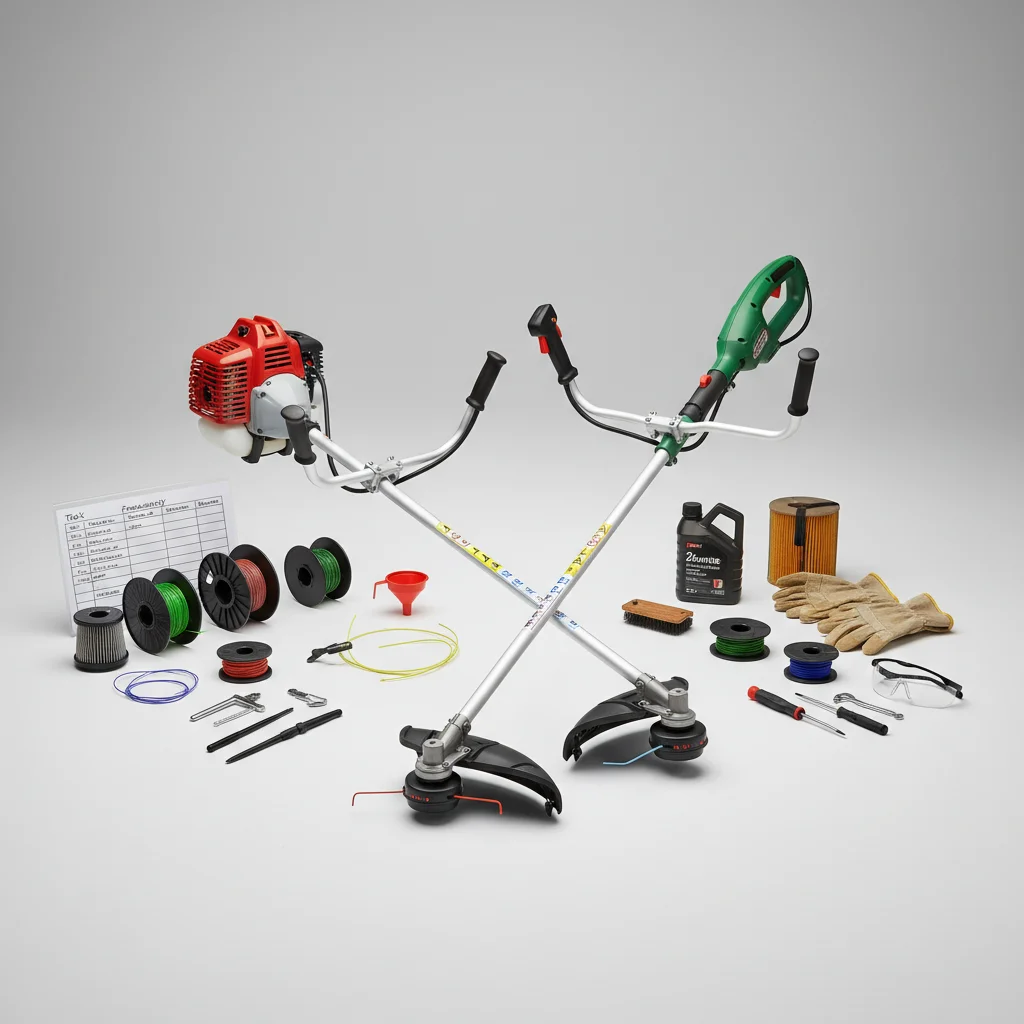
Maintaining your string trimmer on a regular schedule is crucial for its longevity and optimal performance. For most residential users, a comprehensive service should be performed at least once a year, typically before the start of the growing season. However, more frequent checks and minor maintenance tasks, such as cleaning and inspecting the line, should be done after every use to prevent common issues and ensure it’s always ready for your next yard work session.
Daily Checks and Quick Maintenance
After each use, take a few minutes to perform some quick maintenance. This includes cleaning any grass clippings or debris from the trimmer head, shaft, and air filter cover. Inspect the string trimmer line for wear and tear, replacing it if it’s too short or damaged. Also, check for any loose screws or bolts and tighten them as needed. These small steps can prevent bigger problems down the line and keep your trimmer running smoothly.
Monthly or Every 25 Hours of Use
For more frequent users, or at least once a month during peak season, a deeper dive into maintenance is recommended. This involves checking and cleaning the air filter more thoroughly, inspecting the spark plug for carbon buildup and proper gap, and ensuring the fuel filter is not clogged. If you have a gas trimmer, check the fuel lines for cracks or leaks. For battery-powered models, inspect the battery and charger for any damage. This routine helps catch potential issues before they escalate.
- Clean or replace the air filter.
- Inspect and clean the spark plug.
- Check fuel lines and fuel filter (gas models).
- Lubricate the gear head.
- Sharpen or replace cutting attachments (if applicable).
Annual Comprehensive Service
|
Our Picks for the Best String Trimmer in 2026
As an Amazon Associate I earn from qualifying purchases.
|
||
| Num | Product | Action |
|---|---|---|
| 1 | BLACK+DECKER String Trimmer, Electric, 14-inch (BESTE620) |

|
| 2 | BLACK+DECKER 20V MAX Weed Eater, Edger and Sweeper Combo, Includes 2 Batteries and Charger, Cordless Electric Weed Wacker and 130 Mph Hard Surface Leaf Blower, 10 in. (LCC222) |
|
| 3 | Cordless String Trimmer Compatible with Milwaukee M18 18V Battery(Tool Only), 12-Inch 3-in-1 Weed Eater with 8500RPM Upgraded Motor, Automatic Line Feed Weed Wacker for Lawn Edging and Mowing-Red |
|
| 4 | CRAFTSMAN WEEDWACKER® String Trimmer, 6.5 Amp, 14-Inch (CMEST913) |
|
| 5 | Cordless String Trimmer Compatible with Dewalt 20V MAX Battery, 12-Inch Weed Wacker Cordless Auto Line Feed,Electric Weed Eater Battery Powered Grass Trimmer w/6 Line Spools(Tool Only) |
|
| 6 | WORX Cordless String Trimmer & Lawn Edger, 12'' Electric Weed Wacker with 5.5 LBS, 20V Weed Eater with 90° Pivoting Head, Battery & Charger Included, WG170.2 |
|
| 7 | BLACK+DECKER Weed Wacker with Auto Feed, 14-Inch 2 in 1 String Trimmer Lawn Edger, Powerful 6.5-Amp Lightweight Electric Weed Eater (BESTA510) |
|
| 8 | WORX Cordless String Trimmer & Lawn Edger, 12'' Electric Weed Wacker with 4.6 LBS, 20V Weed Eater with 90° Pivoting Head, Batteries & Charger Not Included, WG170.9 |
|
| 9 | Houselife 12" Cordless Weed Eater Compatible with Dewalt 20V Max Battery (No Battery), Auto Feed Cordless String Trimmer&Weed Wacker, Lightweight Electric 20V Weed Trimmer&Edger for Lawn, Garden, Yard |
|
| 10 | 20V 12" Cordless String Trimmer With 2 X 4.0Ah Battery and Charger, Electric Grass Trimmer Battery Powered Eater String, Edger Lawn Tool Grass Cutter With 8pcs Line, Lawn Mover For Garden Yard, Orange |
|
Once a year, typically before spring, give your string trimmer a full overhaul. This annual service should include replacing the spark plug, cleaning or replacing the fuel filter, and thoroughly cleaning the carburetor if you have a gas model. It’s also a good time to lubricate the gear head and inspect the entire unit for any signs of wear, such as worn out bearings or damaged housing. Consider taking it to a professional for this annual service if you’re not comfortable performing these tasks yourself.
Proper storage during the off-season is also part of annual maintenance. For gas trimmers, drain the fuel or use a fuel stabilizer to prevent carburetor issues. Clean the entire unit thoroughly before storing it in a dry, protected area. For electric and battery models, ensure batteries are stored at a partial charge and the unit is clean and dry.
Why Regular Maintenance Matters
Adhering to a consistent maintenance schedule not only extends the life of your string trimmer but also ensures it operates at peak efficiency. Neglecting maintenance can lead to frequent breakdowns, reduced performance, and costly repairs. A well-maintained trimmer starts easier, cuts more effectively, and is safer to operate. Investing a little time in maintenance saves you significant time and money in the long run.
For those looking for reliable replacement parts or new string trimmer accessories, consider exploring options like. Keeping a stock of essential maintenance items, such as extra string trimmer line, spark plugs, and air filters, will make your routine maintenance much easier and more efficient. Additionally, if you’re in the market for a new string trimmer that’s known for its ease of maintenance, check out models available through.
Get our weekly buyer guide
Practical specs, not advice. Unsubscribe anytime.

I always forget to clean my trimmer after each use, but this really hammered home how important it is. I’ve had issues with my line getting tangled and breaking, and I bet it’s because I’m not doing those daily checks. Definitely going to start inspecting the line and cleaning the head more regularly. Thanks for the reminder!
While the tips are helpful, I wish there was more specific advice for electric trimmers. My Black+Decker electric model doesn’t have an air filter, so some of the maintenance steps don’t apply. It’s still good to know about tightening loose screws and cleaning debris, but a bit more tailored content would be great.
Good info on the annual service. I usually just wait until something breaks, which isn’t the smartest approach. I’ve got a Stihl gas trimmer, and I’m going to make sure I get it serviced before spring this year. It’s a bit of a hassle, but it’ll save me money in the long run.
This is exactly what I needed! I’ve been having trouble with my commercial-grade trimmer bogging down, and I suspect it’s due to neglecting the air filter. The advice about cleaning the air filter cover after every use is a game-changer. I’m hoping this will keep it running smoothly for my landscaping jobs.