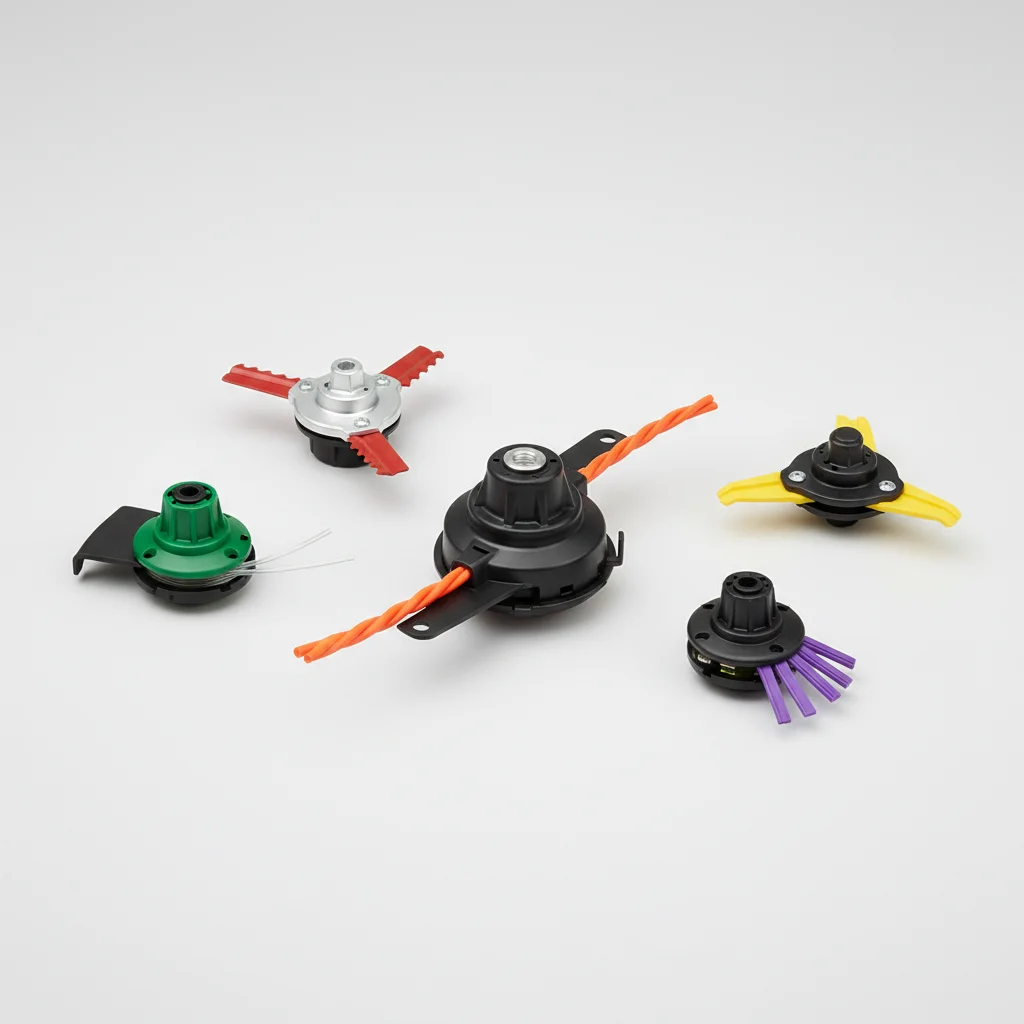
Choosing the right string trimmer head type is crucial for efficient and effective yard work. There are primarily five main types of string trimmer heads available: bump feed, fixed line, automatic feed, speed feed, and manual feed. Each design offers distinct advantages and disadvantages, catering to different user preferences and trimming needs, from light residential tasks to heavy-duty commercial applications.
Understanding Bump Feed String Trimmer Heads
Bump feed heads are perhaps the most common type, known for their user-friendly operation. To advance the line, the user simply bumps the trimmer head against the ground while the engine is running. This action releases a small amount of new line. They are popular for general yard maintenance due to their convenience and ease of use, making them suitable for most homeowners. However, they can sometimes feed too much line or get jammed if not maintained properly.
Exploring Fixed Line String Trimmer Heads
Fixed line heads utilize pre-cut lengths of trimmer line that are manually inserted into the head. This design is often favored for its durability and ability to handle thicker, tougher vegetation without line breakage. Users appreciate the consistent line length and reduced tangling. The main drawback is the need to stop the trimmer and manually replace the lines when they wear down, which can be time-consuming during larger jobs. These are frequently found on more robust, commercial-grade trimmers.
The Convenience of Automatic Feed String Trimmer Heads
Automatic feed heads, also known as auto-feed or auto-advance, eliminate the need for manual intervention. These heads automatically advance the line as it wears down, often using a centrifugal force mechanism or a sensor that detects line length. This feature provides uninterrupted trimming, which is a significant advantage for users who want to focus solely on the task at hand. While highly convenient, the automatic feeding mechanism can sometimes be prone to over-feeding or jamming, requiring occasional troubleshooting.
Speed Feed and Manual Feed Options
|
Our Picks for the Best String Trimmer in 2026
As an Amazon Associate I earn from qualifying purchases.
|
||
| Num | Product | Action |
|---|---|---|
| 1 | Cordless String Trimmer Compatible with Dewalt 20V MAX Battery, 12-Inch Weed Wacker Cordless Auto Line Feed,Electric Weed Eater Battery Powered Grass Trimmer w/6 Line Spools(Tool Only) |

|
| 2 | CRAFTSMAN WEEDWACKER® String Trimmer, 6.5 Amp, 14-Inch (CMEST913) |
|
| 3 | BLACK+DECKER Weed Wacker with Auto Feed, 14-Inch 2 in 1 String Trimmer Lawn Edger, Powerful 6.5-Amp Lightweight Electric Weed Eater (BESTA510) |
|
| 4 | Houselife 12" Cordless Weed Eater Compatible with Dewalt 20V Max Battery (No Battery), Auto Feed Cordless String Trimmer&Weed Wacker, Lightweight Electric 20V Weed Trimmer&Edger for Lawn, Garden, Yard |
|
| 5 | 20V 12" Cordless String Trimmer With 2 X 4.0Ah Battery and Charger, Electric Grass Trimmer Battery Powered Eater String, Edger Lawn Tool Grass Cutter With 8pcs Line, Lawn Mover For Garden Yard, Orange |
|
| 6 | WORX Cordless String Trimmer & Lawn Edger, 12'' Electric Weed Wacker with 5.5 LBS, 20V Weed Eater with 90° Pivoting Head, Battery & Charger Included, WG170.2 |
|
| 7 | Cordless String Trimmer Compatible with Milwaukee M18 18V Battery(Tool Only), 12-Inch 3-in-1 Weed Eater with 8500RPM Upgraded Motor, Automatic Line Feed Weed Wacker for Lawn Edging and Mowing-Red |
|
| 8 | WORX Cordless String Trimmer & Lawn Edger, 12'' Electric Weed Wacker with 4.6 LBS, 20V Weed Eater with 90° Pivoting Head, Batteries & Charger Not Included, WG170.9 |
|
| 9 | BLACK+DECKER String Trimmer, Electric, 14-inch (BESTE620) |
|
| 10 | BLACK+DECKER 20V MAX Weed Eater, Edger and Sweeper Combo, Includes 2 Batteries and Charger, Cordless Electric Weed Wacker and 130 Mph Hard Surface Leaf Blower, 10 in. (LCC222) |
|
Speed feed heads are designed for quick and easy line reloading. They typically feature a simple mechanism where the user threads a single piece of line through the head and twists a knob to wind it. This significantly reduces the time spent on line replacement compared to traditional methods. Manual feed heads, on the other hand, require the user to manually pull out and cut new line as needed. While less convenient, they offer precise control over line length and are often found on older or very basic models.
Choosing the Best Head for Your Needs
Selecting the optimal string trimmer head depends on several factors, including the type of vegetation you typically encounter, the size of your property, and your personal preference for convenience versus control. For light to moderate residential use, bump feed or automatic feed heads offer excellent convenience. For tougher weeds and brush, fixed line heads provide superior durability. Speed feed heads are a great compromise for those who value quick line changes without sacrificing too much durability.
- Bump Feed: Best for general residential use, easy line advancement.
- Fixed Line: Ideal for heavy-duty tasks, durable, but requires manual line replacement.
- Automatic Feed: Offers continuous trimming, highly convenient for most users.
- Speed Feed: Excellent for quick line reloading, good balance of convenience and durability.
- Manual Feed: Provides precise line control, but less convenient for frequent use.
Consider the frequency of your trimming tasks and the type of landscape you maintain. If you frequently encounter thick weeds, a fixed line head might save you frustration. For quick touch-ups around the garden, an automatic or bump feed head will be more efficient. Always ensure the head you choose is compatible with your specific string trimmer model.
Get our weekly buyer guide
Practical specs, not advice. Unsubscribe anytime.
